315 - Spark New Life into your Podcast with our Fresh Ideas!
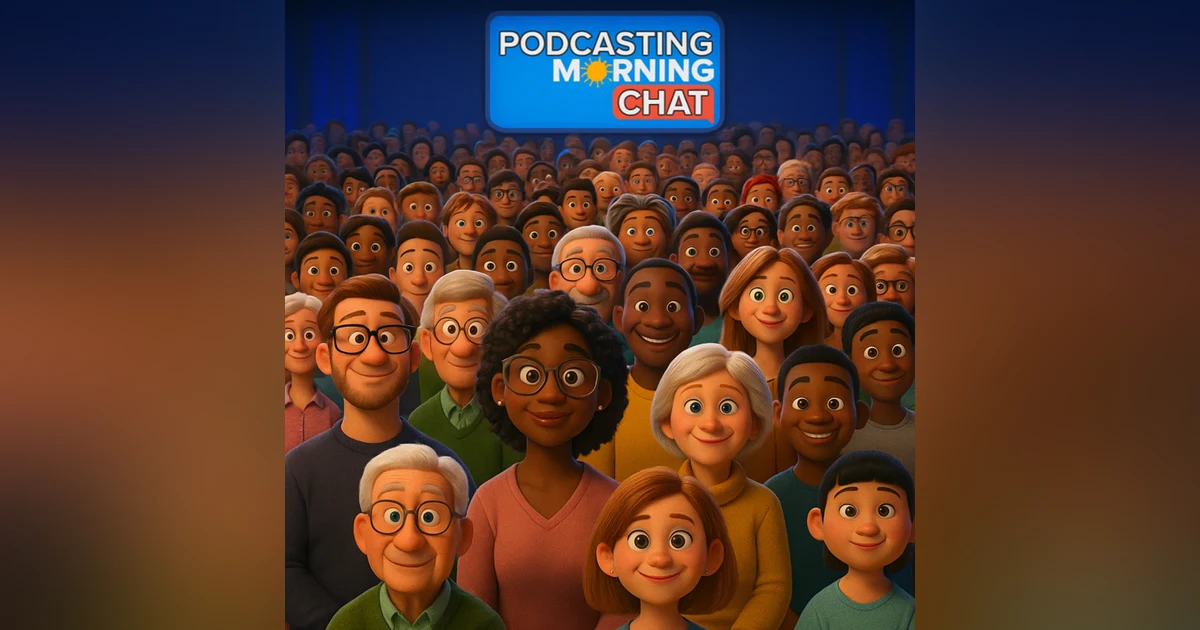


What’s the one thing you’ve always wanted to try on your podcast, but never dared to do? Today, we dusted off the mailbag and found some inspiration in a question from a fellow podcaster: “What’s one thing every podcaster should try at least once?” This got us thinking about all the ways we can break out of our routines and breathe new life into our shows. Today we share the experiments and challenges that have made the biggest difference for us. For some, it’s trying a new storytelling style, or getting out from behind the desk to record in the real world, or even letting someone else take the reins and interview you for a change. We discussed going live, the lessons you learn from editing your own episodes, and the value of connecting with your audience in new ways.
Episode Highlights:
[2:16] Improve Classes & Updates
[7:59] Mailbag Question: Breaking Podcasting Routines
[10:48] Narrative Style Podcasting Discussion
[22:14] Live Podcasting and Editing Tips
[26:53] Listener Reviews and Feedback
[28:04] Understanding Audience Size
[30:56] Round Table Discussions
[38:20] Video in Podcasting
[48:24] Summer Podcast Plans
Links & Resources:
The Podcasting Morning Chat:
Join The Empowered Podcasting Facebook Group:
www.facebook.com/groups/empoweredpodcasting
Empowered Podcasting Conference 2:
https://www.empoweredpodcasting.com
Apply to Speak at Empowered Podcasting Conference 2:
www.empoweredpodcasting.com/speakers
Remember to rate, follow, share, and review our podcast. Your support helps us grow and bring valuable content to our community.
Join us LIVE every weekday morning at 7am ET (US) on Clubhouse: https://www.clubhouse.com/house/empowered-podcasting-e6nlrk0w
Brought to you by iRonickMedia.com and NextGenPodcaster.com
Please note that some links may be affiliate links, which support the hosts of the PMC. Thank you!
--- Send in your mailbag question at: https://www.podpage.com/pmc/contact/ or marc@ironickmedia.com
Want to be a guest on The Podcasting Morning Chat? Send me a message on PodMatch, here:
https://www.podmatch.com/hostdetailpreview/1729879899384520035bad21b
0:04 Good morning podcasting morning Chat. Today is Monday, June 2nd, 2025, and today we're digging back into the mailbag, starting with a question from a newish podcaster. Her question Which one thing every podcaster should try at least once. So if you're listening live on Clubhouse or YouTube, hit the share button, bottom left hand side of the screen and share it. However, Clubhouse lets you. And if you're listening via podcast, please share this episode with a fellow podcaster. And now give us about 30 seconds and we'll get things rolling. Thanks for being here. Good morning again, podcasting, Morning chat. Thank you for being here.
1:24 I am your host, Mark Ronik, and on stage with me we have John. I got distracted because a lot of things are going on. I'll explain in a minute. Jonathan Howard, Nick Nahlbach, producer Ashley Feller, Sid Meadows. Ah, and there she is, Dr. Faye, who's lately somehow, all of a sudden, when she comes in the room, appears in the audience, not up on stage with us. I'm not sure what's going on. That it's a clubhouse thing. I guess so. And then I saw half of the team popping in, popping out of clubhouse. I think there are some glitches that a lot of us are continuing to experience.
2:06 Yep, another one just popped out. Jonathan popped out, popped back in. We'll see. I guess it's a Monday. This is par for the course sometimes, I guess. So today, before we get into the mailbag, couple of little things. One, if you've been following my journey here on the podcasting morning chat, one of the things I do extracurricularly is I take improv classes. I finished a month or two ago, Improv One O 1 and Improv One O 2 has actually already begun. I had to miss the first couple of classes because of my vacation, but they great. They were gracious enough to allow me to join in couple of classes late. So I'm starting that today and really excited Improv One O 2. It's I guess just really more in depth short form improv and I'll share more once I really know more about what we'll be doing there.
3:09 And then if I am enjoying this and want to continue on, then I would join Improv 201 and that's going to be long form improvisation, which I have no experience really whatsoever. I don't even, I don't know if I've even seen a show other than some unscripted TV shows. I don't think I've ever seen an A full, full length improv show before. Were you gonna say something, Dr. Yeah, it's really fun. And you know what? There is a show that happened this past season and it took place in a courtroom and everyone was in on it except for one person who was sitting in the jury. Pool.
3:55 Do you know about this? I do know about it, yes. Yeah. So I think that could be considered, I mean, they had a, they had an outline of where they were going with it, but I think that could be considered a long form. Yeah, absolutely, absolutely. Because yeah, everybody but the one person, that one juror is in on it and they've got to act and go along with whatever happens. Now, granted, there's there is somewhat of a script involved because they've got to make this feel and seem like a real court case. But yeah, there that's definitely a form of long form improv for sure. And Nick reminded us here in the chat. It's called jury duty. If you're interested in checking that out. I believe it where I saw it was Amazon Prime. So it makes.
4:41 Up that Prime or Freevie? Oh, OK. Freevie is, it's a, it's an original to Freevie. Awesome, awesome. OK, cool. So yeah, I'll keep everyone posted on that. And by the way, I wanted, I was hoping Amanda Sharp would join us today because she filled us in a bit last week with some TikTok content she put out there. And I wanted to follow up because it some of it has now gotten some local TV coverage. But she said she'll be here tomorrow. So we will talk more about that TikTok video of hers, how it went viral and how it got in the hands of local television. So stay tuned for that.
5:22 And also, before we kick things off, Nick wanted to come to you. How are things going with the new house? I happen to know a little bit. I know that you are quite, at least you appear to be quite the handyman doing a lot of handiwork in this new house. How are things going with that? I don't know if I they have my handyman, but it's not long made a lot of progress. I was sent in yesterday. We're laying flooring down for one of the, I guess it'll be a new bedroom. It wasn't a bedroom before, but it was a pretty large room in the basement that we're turning into a bedroom. So we're finishing up that, you know, add another little room that'll kind of be a little kind of area. When's the studio going to be built? Because that's got to happen at some point, right? Yeah, that's going to happen this weekend, actually. Emily's parents are coming, visiting from Minnesota, and I'm probably going to take the time when they have the ability to watch her to put together the rest of my studio. The problem is that normally I'm like doing all this stuff like during Ari's naps and the office that I'm going to be setting up is right next door to her room, so I don't want to be hammered and join the walls and things like that was just sleeping. So I have to be strategic with what I'm doing it. Yeah, I hear you.
6:51 And you're going to have to make sure that room's pretty soundproof because you don't want, once it's all ready, you don't want to wake her up while you're recording stuff and doing doing this. Yeah. But we're making it. We're getting there. Nice. We did, however, have because of the house had been sitting by itself for a while. There's a bathtub right above the kitchen and the drain was leaking. So we ended up having I, I, I don't know if you were here when I was talking about this, end up having a leak at someone. They cut a big hole out in our ceiling. So right now it's it's all cleaned up, everything's good, but we just have a giant gaping hole in our ceiling so. That I can definitely relate to that because if you recall before I left for vacation, we had our we had a leak of our own.
7:37 Really, it was a pretty much a pipe burst kind of situation because the pipes got clogged due to some poor use of our garbage disposal. And yeah, I've got a nice big hole in my ceiling as well that I have to tend to now that I'm back from vacation. That's no fun. But hey, let's get into some podcasting talk, shall we? And today's topic at least starts with something from our mailbag. We'll see if we can dig into more of the mailbag today, but I would do want to start with this one. And shout out to Alicia or Alicia. I'm not sure how to pronounce it. I'll say Alicia from Atlanta who messaged saying I've been podcasting for about a year and I feel like I'm stuck in a routine.
8:23 I want to shake things up, but I'm not sure what's actually worth trying. What's one thing experienced podcasters think everyone should do at least once? It doesn't have to be content related. I'm still reading her question, by the way. It doesn't have to be content related. I'm curious about all areas of podcasting. Production, growth, monetization, mindset. Anything that made a difference for you? I thought that this was such a great open-ended question that it just had to at least kick things off today. And if you're wondering why, it's because in my experience, it's easy to settle into familiar formats and work flows as content creators. But some of, at least for me, in my experience, my biggest breakthroughs and from what I've seen from my clients and their biggest breakthroughs, creative creatively or strategically happen when we step outside of the routine and try something new.
9:23 Even if it's just one time. It might be an on air experiment, a behind the scenes change or a new way of connecting with your audience And doing it can be the exact thing that keeps you going because let's be real, pod fade often happens because we run out of energy or inspiration. Sometimes it's because we're stuck in the monotony of it all. So learning, experimenting, staying curious, those are the kinds of things that can be the fix to pod fade. So today's show, at least we'll see how long far this takes us, is a space for us to swap ideas, share what's worked or maybe what hasn't worked, and maybe walk away with one new idea to re energize your show or you or finally try that thing that you've been thinking about trying.
10:18 So I have some more specific questions, but I want to start with Alicia's direct question, and I'm going to ask those of you on stage. And if you're listening in the audience and want to participate, come on up and be a part of this. What's one thing that you think every podcaster should try at least once? I'm going to go ladies first with Dr. And then I'll go check in with Alex, and then I see Ashley's got something as well. Go ahead, Dr. Well, when I hear, I wish she was in the room. When I hear Dom stuff that Dominic does, it's it just goes straight to my soul. And I would love it if I could really get into the narrative style.
11:03 There's just something so elevated about that quiet, personal, intimate kind of sound. Do you know what I mean? That really deep storytelling and it just makes people lean in just a little bit. And even if it's like a hybrid to where I've heard some interviews, like right after the intro, the guest intro, maybe that first question is a little bit of that narrative style where they ask it, you know, that are where they pose it, not in front of the guest, but all of a sudden they push the button and you hear the guest speak. And then the rest of the interview is like a regular, you know, give and take interview instead of not a narrative style, but there's just something about that narrative style that makes people lean in just a little bit. I'm with you there.
12:00 I actually wrote that one down myself too. So I'm on the same page with you. And why do you think it is that we don't get enough of that style? I mean, we get it plenty with the true crime, right? But when in other areas, why is it that you? In other yeah, it just, I don't know why we don't get a maybe people are afraid to do it because it feels very intimate. It feels like they're talking just to me and it just has that air of elevating the entire interview. Maybe maybe that's it. Maybe that's why I maybe I got a little imposter syndrome around it. I imagine that.
12:42 Yeah, yeah. And I and I know it's probably also a little challenging too. There's a lot of work involved in really telling that story as opposed to letting it happen conversationally. And I'm not putting down the idea of the more traditional type of interview where it's back and forth, where it is conversation that that's cool with me. And it's just a much, it's more simple to have that type of storytelling. But doing the narrative, creating a a real story around it and weaving in the interview in and out of the story that you're telling takes more time and more work. So I think that some people just don't have or don't want to invest that time. But I do think even if it was a once in a while thing, I think it would be very well received from an audience. I think change of pace can be good sometimes. I think if you completely throw people for a loop and say, you know, change your topic, yeah, that might jar your audience. But I think doing something a little different and sharing your enthusiasm for it with your audience, I think it helps it become way more accepted and interesting among your audience. Yeah.
13:56 Nick, did you want to comment on that? I've always loved the idea of doing that. That's after I had started going for a little bit and I was listening to how J Klaus put out his episodes. He did something very similar to that where it was he was doing the interview, but he was also narrating that kind of on the side or he like jump in at points to narrate and like pull together the story. And I always loved the way that those interviews came out. Like I was so invested in what he was saying every step of the way. I do think the amount of work and instead put it in the chat as well, the amount of planning and what do you say takes a lot of planning and prep work. And I think that alone is what intimidated me from doing it just because having already done so many episodes at that time, you know that it takes a lot of work just doing the podcast as you're doing it, just a traditional interview. And then when you're already on limited time saying, OK, now I'm going to add another element to this that can require even more of my time and work that can be sometimes tough to pull off or convince yourself, hey, we're going to try this. I I totally love the idea but totally get why it's not as common as.
15:15 With AI these days, it can become much easier to put this together, and I'm not jumping right to the idea of OK, so have it right at all for you, but it can really help you navigate the story. Yeah, I was going to say 100% because, and actually we we hadn't circled back on it, but Mark and I were just playing with the idea of can AI help us create that narrative or help write some of that narrative that some of that planning for us. And I had taken one of Mark's interviews and fed it to AI and it kind of explained what we wanted to do. And I wasn't able to get it like great. But I was able to develop the narrative pieces in between some of the interview questions that he was asking.
15:58 I think it was, I can't remember the interview, but it doesn't matter. But that very well could be a way to help piece that story together and then come in and make tweaks and just to how you see fit. But that's. And you know, you're inspiring me. I'm thinking maybe what I want to do, I may try to go back to one of my older, not older interviews, but one of my interviews over the past year and redo it as a narrative and then allow people to compare, right, what they've heard or can go back and listen to that interview. Maybe it's one of the ones with Heather parody, since I always talk about how much I love those interviews and maybe I so I could recreate it as a narrative and then put them side by side and let people decide for themselves what do they prefer. And maybe I'll use AIA little bit and share how I put this all together along the way.
16:50 And Nick, maybe if you want to help me do that and revisit that would be awesome. So we'll talk about that. And by the way, Speaking of narratives, and then I'm going to go to Alex on Friday. I think it was I shared. Go and find out. That's the name of the podcast by Johnny Wright. And this was a guy who I gave a free consult call to to help him get started with his podcasting. And he, I think blew a lot of us out of the water when I played some of his first episode for you. And I listened to the full episode over the weekend of episode 1 and I was thoroughly impressed. And, and I continue to be impressed by him by the way, because I was looking at his reviews this morning in preparation of talking about this today.
17:34 And he's already had 54 reviews and the vast majority of them are five star reviews. So kudos to him. I don't know how he's promoting it, but I think I'm going to have to reach out to him and maybe have him come on and share a little bit about this experience with us. Because as I told you on Friday, this was his very first podcast. He's never done a podcast before. And just every step that I've seen him take seems to work. And I think digging into how he made it work would be really beneficial for all of us. So stay tuned. I'm going to ask him to come join us one of these mornings. In the meantime, let's check in with Alex. Alex, good morning to you. What did you want to add?
18:16 You know it's. Funny you're talking about narratives because it's kind of happy and sad when you were talking about AI. I'm a big Ken Burns person. I remember when he first started doing all of, you know, Civil War and baseball and all the other stuff that he's done. And it is a different style. It does take a ton of work. And in the conversation it to what Sid said, it does take so much work. But it's great that you can use AII Don't know if that's if people are getting what I'm saying because of all the work that you have to do for that kind of project. Yeah, thank you.
18:56 I couldn't think of that big 50s at work, but yeah, now I think that would be so neat and giving me some food for thought. But in terms of the original question, I guess press play first. The one thing that I've always said is don't press stop right away. If you're used to just stopping it right away right after the interview is over, you miss all this content and a lot of B roll or whatever you want to call it. And I think that's an important piece to your podcasting. And I think and going back to the whole, this is what I also Jarred me when you guys were talking, people are love to talk about how and I'm the same way. They like to kind of let it flow.
19:36 And when you have that narrative, there's not so much let it flow. And maybe in the interview it is, but putting it all together, it isn't. So it's a fascinating way of doing it. I wish I could do it. That's why I'm just so. Jealous of it all. Let's go to Ashley. I know Ashley was one of the first. So, Ashley, go for it and then we'll check in with Jonathan. Good morning y'all. I would say that every podcaster a challenge that they should take on is to get out from behind their desk if they have the equipment available to them such as AP4 or maybe a Rd. caster. Go out somewhere in public and interview someone in your local community. One of the things I've never really understood about podcaster behavior, Not that there's anything wrong with using tools like Riverside or any kind of browser based recording software.
20:29 I think they miss out on the real human connection of going to a physical space and accepting imperfection in sound and being in a little bit of an environment that you can't control. It's, it's really exciting. It makes your production abilities tighter because there's more things to mitigate. And I just think that it's great to find someone who could be in your own backyard versus searching the whole wide world over when they could be right there. And getting back to the AI thing, every once in a while I would try to do them in a narrative format. And I did have AI help narrations. What I ended up doing was giving it the transcript and I asked it to split this hour long interview you into acts, and in between the acts I would have it right like a prologue and epilogue and commentary between poignant subjects we were talking about.
21:25 And that's the way you can try something new. Oh, thank you. I love that. Thank you for a specific example of how to turn your regular interview into a narrative style. That's really helpful. Thank you, Ashley and, and I agree with you by the way, about getting out from behind your desk. I think, you know, when we talk about the monotony of everything, it does change things up. It does get you out there and connecting with people you probably wouldn't have connected with if you decide if you just stayed behind your desk and did your podcast the way you normally do it. It also helps with exposure if you're doing it in the public place, people are going to see what you're doing.
22:06 They're going to start asking questions. You never know what kind of listeners you might get from that. I love that. Thank you. Ashley and Jonathan coming to you. What did you want to add? We are answering what's one thing every podcaster should try at least once, and it's going to be kind of the same, but a little bit different. Go live to a live episode at least once, even online, is what you're saying? Like an online live? Yep. An online live where you're actually just. Doing the recording and not even recording it, it's just going out to people and then you post it later. Mimi and I did one at the podcast Movement last year and it was. Actually just it was a lot of fun to do and it's breaks you out of your regular flow.
22:49 Yeah, I agree. And it breaks the audience out of the regular flow too. I think gives them something a little different and it makes it a little more exciting for them to see you out of your element and being excited about it. So I'm with you there, Jonathan. Thank you. And Sid and for go ahead for us, we get to actually be together where normally we're apart. That brings a whole other energy and chemistry as well. Yeah. Yep. Love that. Thank you, Jonathan. All right, Sid, coming back to you. OK. So I have two things that I would say. I say one first would be editing. Do the editing because it gives you a perspective what's involved in actually the production of a show so that when you do decide to outsource it, you have a sense of the value then that's associated with it and why the cost is what the cost is to do it, right. So I think like sitting down and trying it, I did twice and I after the second time I'm like, screw this, I need an editor, right?
23:45 I'm not doing this. This is not my skill set. But it just gives you a different perspective of all the things that are involved in doing the, you know, being a podcaster, right? So that's the first thing I would say. The second thing I would say if you haven't done it, absolutely 100% try to do a do a solo episode, just you and the mic, because that also pushes you outside your limits. My first episode was a solo episode. It was a trailer. Obviously I didn't know what the heck I was doing. And then I said, OK, I'm going to do a solo episode. And then as I've done them, I just got better and better and better at them. So I think doing solo episodes will help you improve your skills as well. Thank you, Sid. Appreciate that.
24:26 And I mean, there are lots of different ways that someone could outsource their editing. I sat here thinking because I had that written down coming into the show too, is outsource your editing. And I know that the the common answer to that is, well, I can't afford to hire somebody, but there are that doesn't have to be your only solution. First of all, there could be people that might, that you know personally that might have those skills that might be willing to do it. For example, somebody in our community, Jackie, her husband has all sorts of skills like that being in TV and movies, and he helps her edit her podcast. Could be your kid. I know several podcasters whose teenage kids are editing for them.
25:11 Quite frankly, they have those skills. A lot of them have those skills naturally 'cause they're creating content all the time anyway. And also, you know, sometimes, although I'm not, this is wouldn't be my first suggestion and probably wouldn't be my 5th suggestion. I don't know where I came up with five, but it this would probably be later down the road of suggestions, but you could always look into something like Fiverr. But what I would say is if you're going to do that, try to get a referral, a recommendation, somebody who's using somebody from Fiverr already that they trust and they believe does quality work just because sometimes you could it, it's a little harder to weed out the good from the ugly on fiber, at least it was for me.
25:55 So if you're going to use fiber, like I said, see if you can find a recommendation first. But there are all sorts of ways and fiber would be a very inexpensive way in many cases. Does anyone else want to share? And by the way, I I see a bunch of people listening live in the audience. Please come on up if you have an idea. What's one thing every podcaster should try at least once? And I'm going to throw some what I maybe you consider low hanging fruit. But for some new podcasters or even long time podcasters who aren't doing this, ask for reviews. It's something I don't do enough of. Ask your audience to go leave you a review on Apple or go rate your podcast on Spotify.
26:40 There the social proof we talk about all the time. It is real and it is a thing and it's helpful for some people to make those choices of whether or not they're going to press the play button. So I would say ask for reviews and I'll do it right now. Please do leave us a review. As a matter of fact, I know we just got one not I haven't read the most recent one that we got and this is of not asking enough because the last one we got was in April I believe. So I'm going to ask you right now, please if you haven't go leave us a review and you could be and then I'll read it like I will for this person. Pam who said this was in on April 13th. I've listened to 1 episode and I found it extremely beneficial. It was nice to get a variety of insights and suggestions from contributors, not just a single host. So glad I found this podcast very valuable. So thank you, Pam appreciate that. And again, if you have listened to 1 episode or many of the podcasting morning chat, I ask you, please go leave us a review on Apple.
27:46 You can do that even if you don't or if you're not an Apple user, just search for the podcasting morning chat, Apple Podcasts. Just Google it and you'll find at the podcasting morning chat, and then you can click through and leave us that review or go ahead and leave us a rating on Spotify. I would appreciate that. Billy, welcome to the stage. What's one thing every podcaster should try at least once? Good morning. I miss you guys. It's Yeah, good to have you. I've. Been busy? Yeah, I mean dizzy moving to an island. So I'm here and do some errands. The one thing I was thinking about this morning is with any audience size, people are always like, I only got 1000 people listening or 400. Go to Google and typed in audience of 400 and just really look at how many people that is and really look at you know what that audience size is if you put all those people into a room.
28:37 I heard this exercise on a different show and I was like, you know what? That is a pretty good perspective. And I've always said it like, oh, imagine if you have 30 or 40 people in your studio or wherever you record or your closet or whatever, you probably couldn't fit them in there. But then when you go and Google search and, and, you know, trying to get an idea of what that looks like, I think you'll be pretty impressed with yourself to go, OK, I am making, you know, an impact. People do care what I what I have to say. So don't do that. I love that Billy. Thank you. I know I've shared that before too, and I may have heard that originally from Pat Flynn. I'm not saying he's the originator of that, but I that's where I first heard that and I have a an update to that.
29:22 Instead of Googling it, just go to ChatGPT, tell it to show you what a studio audience of 204 hundred, 800, whatever it is people looks like. I just did it here. And it really makes a difference when you can actually see an audience. And again, my prompt was show me what a studio audience of 400 people looks like because that's the way I envision, right? If I'm doing this show and I and say 400 people on average are listening to this show, what does that look like? And put that right in front of you. To some people, I'm sure that might be a little intimidating. To others, it's kind of exciting and it does, like you're saying, put it in perspective because sometimes when even 100, right, if you have 100, even 50, if you have 50 listeners, if you get a picture of what that looks like, it really changes things up. I love that Billy maybe go get.
30:20 A vinyl banner printed and hang it in studio if that would. Bring a different energy. If you're like, OK, I got to get off. I got to be off, yeah. That'd be interesting. Yeah, that's another one I think I'd like to try. I love that. Thank you. So yeah. So go try that all if you haven't already, go try that with ChatGPT version 4 O type it in and you'll get a nice realistic image. Put in your average audience size and see what that looks like. You're not talking to nobody, even though it feels like it sometimes. Dr. you, you must have another one for us. What's another thing that every podcaster should try at least once?
31:01 Well, what we've. Covered so far is recording outside editing, which I confess I was just doing just now because I've got some stuff and narrative. I don't know, maybe doing what we do is the whole the round table. I mean, even the person who wrote the review liked the whole all of the the different voices. All the different. Voices all the different opinions in one spot instead of having to go to 1 episode of something for to hear one person and then having to go all the way over and have maybe rushing through. Maybe, you know, fast forwarding through to get the the same another answer on the same topic by a different guest.
31:49 That's the only thing I can think of. I love round tables. This is a round table and to be part of a round table is fantastic. Yeah, I'm with you. A show that I've referenced here on the podcasting morning chat before. A friend of mine, Meredith, for real, the curious introvert. She just put out a show last week that I really enjoyed. I'm about halfway through it actually, so I haven't finished it yet, but so far I'm really enjoying it. And she brought on. It was rare for her. It's usually just her and one guest, but she brought on three or four men to talk about men's mental health and I believe June is Men Mental Health Month. You could tell she was really enjoying it as an audience member.
32:34 I was enjoying it, true. You know it. It was really speaking my language, talking about men's mental health. And also it did change things up from what I'm used to hearing on her episode. And it was nice to hear different opinions, different perspectives as a regular listener of her show. So yeah, I like that one. Thank you. Well, let me ask you something. Because the other thing that someone should try is to moderate it, just like you are doing this show with all these different voices. That is a skill that every time I'm asked to host that I kind of grip my teeth a little bit and I try and channel you because you're very good at transitioning from one voice to the other, looking at the hands. You're very good at that and I try and channel you. So I think that's maybe something that people should try is to try and moderate this.
33:33 I agree with you it. It does take practice and skill to do it and I think I'm still learning all the time. And I agreed with most of what you said. I think I can do a better job seeing who who's raised their hand and wants to speak next. I think sometimes I don't do the best job at that, but that's OK. Yes, yes, exactly. And Sharon has joined us on stage again. Good morning, Sharon, welcome back to the stage. What did you want to add to this? Hey Mark. Hi everyone. I wanted to agree with DRI wasn't going to come up until she said that. But Mark, I wanted to say you have inspired me to do what I should have done many months ago. I'm always on Clubhouse.
34:16 I took a break when Clubhouse started taking a little departure from the live rooms and I came back, as many of us did, right? Yep. Nevertheless, I've been doing rooms really since the first day I'd been on Clubhouse four years ago and I never even when I I started my the latest podcast about two years ago and I did not recycle, repurpose my rooms here on Clubhouse that podcast until recently. And although I started a little bit before your room inspired by you doing this room and the way you set yours up is very similar. So I wanted to just tell everyone to try that if you haven't and just see how it works as well as having other voices on. I never really did that either.
35:07 So thank you, Mark, for what you do every day, every day, as well as everybody else. Thank you, Sharon, I appreciate that. Really. Do that means a lot to be seen and recognized and even more so, you know, that's that's the overarching name of what we do here, right Empowered podcasting. So I'm I'm glad to hear that I empowered you to go out there and do something similar. That's exciting. Thank you. And Sid, did you want to add something I just had another idea for? You when you're ready sure, go for it I. Would say that. Pass the mic. In other words, be the guest and not the host. They come for the content, they stay for the host.
35:50 So give them the opportunity to get to know you by letting you be interviewed by somebody. I always have a lot of fun with that. My most recent episode was passing the mic to a guest host. And it's just really fun to be the person being interviewed versus interviewing. So I think that's a really great thing to do. And then the second thing that I would say is this is back to the basics. But if you don't know your audience and you don't know your ideal listener, please research your ideal listener. Go talk to them live in person. Ask them what's going on with them. If you're struggling with the listeners that probably, you know, people downloading, it probably means you're not talking to the right people and you don't necessarily know your your target audience or your avatar very well.
36:32 So do the research and know who that person is that you're talking to. Thank you, Sid. And what would be your advice if somebody's having a hard time actually connecting with their audience, but they want to get to know their target audiences, interests, disinterests, etcetera, What would you suggest? Oh, that's a really great question. So the first thing I would suggest is reach out to the people that you know that are listening to your show. Each of us likely know the people that are listening to your show. They've either left you a review or they've sent you a message, hopefully, right? Reach out to the specific people. That's what I'm doing right now. I'm reaching out to these specific people that are, I know that are listening to my show because they've reached out to me, connected with me in some way. However, say you want to talk to the CEO of a small business and that small business is a local small business right in your town, or the owner of a local small business in your town. Then go knock on their door and ask to talk to them about their business and who they are, right? If you've got this vision of who your ideal person want to talk to and you don't know them personally like they had shouted on your show, but you know who they are, then go find that person and talk to them.
37:44 That makes sense, Mark. Yeah, that makes great sense. Thank. You and I would also do some other things like Googling your target audience. Maybe you know that your target audience are men, ages, I don't know, 25 to 39, and you want to learn what interests, Google it or use AI and get something, get something to start with, a baseline to work with. If you're really having trouble connecting with your audience one-on-one, then, yeah, just do a little investigative work yourself. I love that. Thank you, Sid. I appreciate it. What do we think about the the V Word video? We know more and more podcasters are getting into video because it's being pushed so hard these days, and not every podcaster's doing video.
38:32 Do we think that video is something that every podcaster should try at least once, and if so, why? There's reasons to go to. Video people, some people say, oh, you have to do video. No, you don't have to. I mean, discovery is great. Yeah, the discovery on YouTube is great, that's for sure. But if it's not in your heart, it's just not in your heart. And there are other ways of doing video rather than showing up on camera. So do you remember years ago when VH1 first started, they had something called pop up video and and it was random things like when they were filming this, there was a huge thunderstorm. And I mean, it was just random, made no sense as to why they were there.
39:22 Little factoids. And I really thought that, but it kept me interested. I didn't even like the song, but it kept me interested because I wanted to see what the next thing that came up was. And I thought that maybe doing even a static image or maybe in an like a carousel of images that would rotate during a podcast. But with those pop up images, John has a dog named Bernard. And you know, I mean, it just some kind of weird facto things to keep them sitting there in front of the I don't know. This is no. This is a great. Idea. I love this idea. It's because you're making it more interactive.
40:04 You're keeping your audience engaged. Like you said, you you were listening to the songs all the way through because you wanted to see what was the next fact that popped up on the screen. I think that that can work similarly in podcasting. Absolutely. And even if you're not on screen, like you said, even if it's like a static image there, but the pop ups are happening throughout the episode. I think that yeah, that keeps people engaged. I like that idea. OK, You make me feel better about the. Show go ahead. Janae love watching that. Those pop up music videos, I think Ashley said the same thing. It would be so fun. You know, people just watching video and then they see the wait for the next factoid because they don't know what's going to come next. And a lot of the the ideology behind video is that you're just being the in a hook state and then, you know, you close the loop and as soon as you close the loop, you open up the hook. And I think these factoids will do the exactly the same thing for people to watch the videos and all the factoids would. Be about the guest and the guest and the host. You know, just just like randomoid kind of things. Yeah.
41:12 Thank you for the encouragement, everyone. Right. Exactly. Yeah. And I'm even picturing like when during an interview, maybe you had to stop the recording or stop the actual interview for a minute because somebody had to take a bathroom break. I would put a pop up there like that said, we actually took a break here because I had to go use the restroom. I I would throw that kind of stuff in there, too. Exactly. Yeah. Behind the scenes stuff, can't see it. They can at least read about it, you know? Yeah, for sure. Janae, I'm going to come back to you since you're on stage here. Do you have any suggestions for somebody, well, for any podcaster that they should try at least once?
41:56 Mark, thanks for. Asking and I was blanking. I'm like, wow, that's something really cool. And as I'm listening to different things that we could be doing, it's like, wow, I've never thought of that. You know, I've always had it one specific way. And one thing that I. Am leaning into is kind of creating like a miniseries that people can listen to with my podcast. If they don't want to listen to the other episode, they can come and listen to a miniseries of, oh, how to set up a studio or how to sound really good for your very first podcast. So maybe like a mini series. If somebody hasn't tried that, that would be 1 good thing to do. And I know a friend of mine, he does these miniseries or they'll do different types of series on their podcast. Oh, you know, June is AI month or June is mental health month for men.
42:51 It's so that could be another way. So you're basically using the theme of the month to highlight on your podcast to be more in line with a chance. I like that one. And yes. I know somebody who hosts the show ADHD Big Brother, that's the name of the show and he often themes out each month. Like one month it was getting organized for these people with ADHD that's very challenging. So he had a month's worth of episodes all around organization. Some another one might be overwhelm or you know, ways to stay focused. You know, he'll pick a theme for every month. I think he's doing one for entrepreneurs with a DHDI. Think that might have been just this past month having a business with ADHD.
43:45 So yeah, theming out your content can be interesting. Keep things interesting for you, keep things interesting for your audience. I agree with you. Another one for me that I think it is important to say out loud that I don't believe enough podcasters are doing is to share your personal journey. This is kind of piggybacking off of what Sid was saying. Have somebody interview you because ultimately that will be hopefully you sharing stuff that you don't normally share on the show because you're always asking the questions, not giving the answers. But I think having some episodes, and I think maybe it was Sid who also said doing a solo episode, it's another opportunity. I think the more your audience gets to know you and what's behind this podcast, why did you start it in the first place? What's the motive, what's the goal and what was the inspiration?
44:37 I think that helps create a deeper relationship between you and your audience. That's scary, though. It can be. I'll tell you what. I mean, you interviewed me. You interviewed me for mine and you did some research I didn't expect for you to do. So that was interesting. Yeah. And it can be. Scary. And I think, you know, like everything, new stuff can be scary. And I think the more that we do it, the easier it gets. I feel like at least maybe I'm not always an open book here and I feel like I'm comfortable enough to always be an open book. So when there's an opportunity to share, I'm I'm happy to share some of my journey with you. It does make me more human.
45:21 It does show that, you know, some people come to me and they say, you know, they can't believe how much I've got it all together. And that's so far from the truth, right? I struggle. I often struggle coming up with topics to talk about during the show. I struggle after the show feeling like some not every show but after some shows feeling like that wasn't my best performance and the more I can share that I think the more real it makes me and the more my audience will want to support me. I'm cured if people agree with. Me on this Dr. What's the one thing people crave the most? Are we leading to authenticity? Nope. What's the? One thing people crave the most. Mark, do you know what I'm talking about? I mean my what?
46:04 Comes to mind. First is connections. Yeah, human connection. That's what we crave, right? And the person, whether it's you or your listener that's put their earbuds in to listen or watch you, right, are craving a connection with you. There's a device between you and them. So if you give them the gift of telling your story, you have no idea the amount of impact that you can have on somebody's life, right? Even if it's just one person. I talk about this all the time to people. It's just like try to impact one person, one person. If you do something or say something, or your story can help somebody make a better decision than they were about to make, then in my opinion, you are a successful podcaster. You are a successful content creator, right? Because you're impacting people.
47:00 So give them the gift of hearing your story. Don't hide your story. Give them that gift because something that happened in your story could very well change the trajectory of their life. I feel like I need to. End the show here. And I'm seeing if you don't do that, don't do that, Sid. If you look in the chat here, we've got a lot of people cheering, cheering it on. What you're saying here, shouted from the rooftop. Sid, Preach. Sid. Yeah, I'm with you. And I think that what happens sometimes is that some of us think that, well, as long as we're providing value and information, value and information that will create the connection. But it really doesn't, right? It makes you valuable.
47:43 But to really take advantage of the full value, people have to get to know who you are. Then all of a sudden, the information and value that you're sharing means something more to them. It's more impactful, right? You can give them all the answers, but if they don't really know who you are, they can get that from ChatGPT, right? But once they really know and understand what makes this person tick and what that this person has been through that that's able to share their experience, their expertise, then all of a sudden it, it hits differently. At least it does for me. And I know it that same approach for my clients. It's it's helped them and it's worked for them too. Thank you, Sid, I appreciate that response and I do think that this is a great spot to wrap things up.
48:29 So thank you Sid. I appreciate you wrapping it up in a nice bow like that. And we are going to be back tomorrow and tomorrow looking at through the mailbag here and also some this coincides with some suggestions I got from the team over the weekend. I think we're going to talk a little bit about summer and what our plans are for this summer. What are we doing about podcast and creating content over the summer? Because let's face it, we all have lots of different plans and activities going on throughout the summer on top of our day-to-day routines, on top of our podcasting. Sometimes it's a little hard to manage it all and I'm curious, what are we doing for it? So think about that and come share what you've done in the past or what you're planning on doing this summer with your podcast and content creation. We'll do that at 7:00 AM live, then that's Eastern Time here on Clubhouse and on YouTube as well. So join us in either place.
49:26 And if you can't, no problem, just check out the podcast a few hours later on your favorite podcast platform. So until tomorrow, make it a great day everybody take care.


