556. How to Improve Your Podcast Intro, Interviews & Pacing


Key Takeaways
- Learning how to improve your podcast intro is essential for grabbing listener attention before they drop off early in the episode.
- First impressions heavily rely on audience clarity, strong branding fixes like taglines, and compelling cover art.
- Mastering pacing, confidence, and delivery helps keep listeners engaged from start to finish.
- Asking a strong one-question hook and speaking directly to one person instead of a broad crowd improves connection.
- Sharpening your interview style by avoiding stacked questions leads to much better, more natural conversations.
A great conversation can lose listeners before it ever gets started, which is why it's worth learning how to Improve Your Podcast Intro while also sharpening your interview skills and pacing. The morning show cast and crew break down what makes an intro grab attention, how to ask stronger questions that lead to better conversations, and why slowing down at the right moments keeps listeners engaged. By the end, you'll have simple ideas you can apply to create a stronger first impression and a more engaging podcast from start to finish.
Episode Highlights:
[06:46] Nikki Joins the Hot Seat
[08:06] First Impressions and Audience Clarity
[11:50] Branding Fixes: Tagline and Cover Art
[18:50] Intro Clip and Opening Feedback
[23:55] Pacing, Confidence, and Delivery Tips
[29:37] The One-Question Hook
[31:30] Talk to One Person, Not Everyone
[41:34] Transitioning into Key Takeaways
[46:22] Interview Style Review
[48:40] Avoiding Stacked Questions
Links & Resources:
Listen to The Gentle Year, Episode 35:
Feature Your Podcast on the Podcasting Morning Show:
https://PodcastingMorningShow.com/spotlight
The Podcasting Morning Show:
www.podcastingmorningshow.com
Ways to Watch or Listen: https://www.podcastingmorningshow.com/joinus/
Meet the PMS Cast and Crew:
https://podcastingmorningshow.com/people
Join The Empowered Podcasting Facebook Group:
www.facebook.com/groups/empoweredpodcasting
Book A Free Call With Marc:
https://go.ironickmedia.com/widget/booking/eQwHs399qL9VlLcRQaYC
Application To Submit Your Show For Evaluation:
https://podcastingmorningshow.com/eval
Powered by iRonickMedia.com and ContentCreatorsAccountant.com
Send in your mailbag questions: https://www.podcastingmorningshow.com/contact/ or marc@ironickmedia.com
Want to be a guest on The Podcasting Morning Show? Send me a message on PodMatch, here:
https://podmatch.com/hostdetailpreview/1729879899384520035bad21b
Frequently Asked Questions
How can I improve my podcast intro?
To improve your podcast intro, focus on grabbing attention early with a compelling opening clip, clear audience targeting, and a concise hook that sets up the episode's value.
Why is pacing important in a podcast?
Pacing keeps listeners engaged by ensuring the conversation flows naturally, knowing when to slow down for emphasis, and avoiding rushed deliveries.
What are stacked questions in podcast interviews?
Stacked questions happen when an interviewer asks multiple questions at once before letting the guest answer, which can confuse both the guest and the listener. Avoid this by asking one strong question at a time.
0:06 Marc Ronick: Good morning, Today is Tuesday, july 28, 2026, and today we're back with another podcast evaluation, breaking down the gentle year to uncover what makes this emotional interview connect, and where a few small changes could make it even more powerful. So, if you're listening live on Clubhouse, hit the share button, top right hand side of the screen, and share it And if you're catching us via please share this with a fellow podcaster. And now, give us about 30 seconds, and we'll get things rolling. Thanks for being here. The podcasting morning show is powered by Ironick Media, helping podcasters launch, polish, and grow great shows, and by Content Creators build real business behind their Good morning again, podcasting morning show.
1:23 Thank you so much for being here. I am your host, Marc Ronick, and co-hosts. We have Ralph Estep Babbles, Sid Meadows, and D. R. Fay. We also have Junaid and Dan from the audience. Junaid, Ahmed, Dan Schultz, and we also have Knikki Hernandez, aka Tide Tutoring, who will be on the hot seat. I will share in a moment. Actually, why not? I'll just share right now. Today we are evaluating the Gentle Year, the podcast hosted by Knikki, and in this episode for evaluation, Knikki speaks with psychiatrist Cassie O'Day about childhood trauma, attachment, identity, survival responses, and the experience of feeling like you're too much. We'll look at the show's branding, Knikki's interview style, production choices, pacing, the audio quality, and the overall listener experience. So, if you've been listening in the past, you know how these evaluations go.
2:32 But basically, what we'll do is we'll break those things down into different categories. I'll play you clips so that this way, if you haven't listened to this episode of the Gentle Year, you'll be in the know. I think we do a good job of navigating this so that you feedback, our comments, and So stick with us here, and why not? Let's just dive right in, and let me get my board ready to make sure that there. Okay, there it is. All right, so I won't hit the wrong button today. And yeah, DR: Marc can we acknowledge someone that's in the audience that we haven't seen for a little while?
3:13 Marc Ronick: Yes, we can. Good morning to Nick Nallback, who hasn't been able to join us ever since the time change, but he's here this morning, listening in, and of course, welcome up on stage. And hello to DV, who is in the audience on Clubhouse as well. Up here comes Nick right now. By the way, since we're bringing up Nick, and we'll say a quick hello to him. Also, please stick around till the end of the show today. I've got a big announcement regarding the show, and I want to share it with you, so stick around. first, and then I want to share the announcement with you. But first, good morning, Nick Nick: Hey, good morning, Marc Ronick: Welcome back, my Nick: Great to see you all here. Marc Ronick: Yeah, great to see you too. I'm guessing we're not going to have a lot of you today anticipating Arya waking up this Nick: Yeah, I feel like I'm on Sid Meadows: Let's get to the Nick. How is Arya?
4:11 It's nice. Sid Meadows: It has the little one. Nick: Oh, she is. Nick: He's doing great. He's still a happy, happy, fun baby, and I guess she's not really a baby anymore. She's a toddler, but Marc Ronick: yeah, Nick: she's a lot of fun. Marc Ronick: I follow your wife on social media, so I see all the different pictures of her. And yeah, it looks like you guys are having a good summer. Nick: Oh yeah, she's nonstop. So we're just trying to keep up with her. That's the goal. Yeah. Marc Ronick: How old is she now? Nick: She's two and a half, a Marc Ronick: Yeah! Wow, very cool. And Nick, you are saying that you think you're going to be able to swing it and join us at Empowered Podcasting August 21st through the 23rd. Nick: I think I should be able to pull that off. Marc Ronick: That's awesome.
4:54 Nick: Yeah, that's exciting. and kind of catch up because I Yeah, since that time change, but yeah. Marc Ronick: And Junaid, just so stage, I've already told Nick that he's going to be helping you with the audio video stuff at the event. Junaid: Sorry, Nick. Nick: Then I get to play with all your cool tech, so I'm cool with it. Alex: I'm the one that's saying sorry. Marc Ronick: Well, why are you Alex: Because I can't go. Marc Ronick: You can't make it. Alex: I know. See, I've been getting these harassing texts from Marc, and they're so sweet, but they're so like it's just not going to happen. Marc Ronick: All right. DR: Hey, Marc, Speaking speaking Will there be any like replays of some of the talks that are given? Something that we could see on video that will be available. Marc Ronick: Yeah, well, BC Babbles, who's here, he's going to be our on the scene correspondent, and I think that one of the things we're going to and do some live stream stuff. So yes, we'll definitely from social media we'll be sharing video of people of talks of what's going on in the hallways, etc.
6:11 And we I'm not sure if we're going to actually live stream the event officially. I just haven't decided yet because I've talked about this before, I feel like this is an event that I just-if you can be there-and after the event, if you want to see what happened, if you want your access to those different talks, yeah, we'll make that available. But I'm not sure I want to do a live stream. Yeah, yeah. Junaid: Yeah, just wants a recording. She doesn't want to see people having fun. She's gonna be like, "What? I don't want. I didn't get there. Marc Ronick: All right. DR: I'm so sorry. Marc Ronick: All right. Let's dig in to the show today. Like I said, podcast evaluation.
6:54 We don't do. We don't often do these with the podcaster on stage with us. So, good morning to you. And how are you feeling about being in the hot seat and hearing a live evaluation of your own show? Tide: I'm feeling really good respect you guys's feedback. And then the next thing is that, like, I know that there's so many things that I can improve, so I'm looking forward to hearing how exactly, or how I can do that, and also what you guys think I should focus on. So every little bit of feedback helps, and I appreciate it so much. Marc Ronick: Love that. Well, you've just made it a little bit easier for us to do this because sometimes we do feel a little awkward when we know the podcaster is there, but as you know, we are very gentle with our feedback.
7:43 We give it, even if it's constructive. But we're gentle about it. So let's dive in and let's start with some first impressions, the branding, and then we'll play the intro as we normally do as far as clips go. So I'll open this up to the What was your overall listening experience? What did you think overall? You don't have to get into the nitty gritty. Ralph Estep Jr.: I thought it was fantastic. I thought it was a wonderful podcast. I thought it was hosted by a true professional. Some of that understood the mic, understood how to bring out a conversation, and of course, I'm a little biased because I think Nikki's a great person, and I think the work she does is fantastic. But absent that, I mean, it was really a good show, and it was one of those things where I was really wanted to hear this the end of it. And I actually listened to the second episode with this person as well.
8:32 Marc Ronick: Oh yeah, that's one. Ralph Estep Jr.: Yeah, I think she did a great job. We'll talk about some things that I think she can work with to even make it better. But I think my overall first impression was A plus, Marc Ronick: awesome. And anyone else want to chime in? If not, yeah, BC, go ahead. BC Babbles: Yeah, just to kind a great episode. I really enjoyed really the care in this conversation. We'll get into the topic later, I'm sure. But I think the way that this was approached, considering the topics discussed in the episode was done with a great level of professionality, so it helped me as someone who can't fully appreciate the depth of it And I think that's a great says a lot about Tide's skills as a podcast host and producer, so great job!
9:21 Marc Ronick: Thank you, BC. And we're going to go to you, Sid. And please share what your overall listening experience was. But also, I'm curious. I'm going to throw a second question at you, Sid. Who do you believe that after listening to this that this show is trying to serve? Who do you believe is Knikki's target audience? Go ahead, Sid. Sid Meadows: Yeah. Good morning, everybody. So, Knikki, you have a very calm and welcoming tone in your voice. It's just very comfortable to listen to you talk. And as I'm thinking about this, I'm thinking that's why you're a teacher. You can approach these these kids in a nice calm. And yeah, so it was. It was really. Easy to listen to, but it was a very deep topic. Yeah, like a really deep topic. But you are certainly easy to listen to, and I am going to answer your question mark and say that I don't know that I have the answer to that question. I believe it's parents, but the gentle year to me means, on the surface, it means like in the first couple of years of parenthood that, but it could mean something different to somebody else.
10:29 So I know it's for parents, but what stage of parenthood? I do not know. That was not clear to me. Marc Ronick: Sid, do you think parents if you didn't know Nikki Sid Meadows: No, I would not That's a great. That's great follow up question. I would not have known this was for parents. Marc Ronick: Okay. Okay. Fair. And DR, go ahead. DR: I would have known well for the relationship between a parent and a child only because of that image on the cover art. Marc Ronick: Ah, do you want to talk about that a little bit? Since we're in the branding category here, DR: kind of an abstracty kind of, you know, you don't see any faces, but you just see this Marc Ronick: a silhouette. DR: Yes, a silhouette, and that told me it was about a relationship between parents or guardians, adult and child, is what it told me.
11:29 Marc Ronick: Yes, that's that that. Think about the traditional Facebook silhouette that you see when somebody doesn't use a profile picture. Think of that, but instead now incorporate a smaller head and body, and the two silhouettes facing each other in profile in profile vision. Yes, exactly. So okay, so I think then we've uncovered one area for We don't. We I think can all agree that it's not terribly clear for by just the name, for example, it's some people may not connect with the idea. Like, what is the gentle year? How does that pertain to parenthood per se? So there, there's that.
12:09 And then I think maybe this could use a tagline. Yeah, like Ralph Estep Jr.: I was just going to jump in there, and I was going to say that's exactly what this needs, and I think that would be a huge lift. Yeah, Marc Ronick: yeah, I think so too. So yeah, I think Knikki, there's one piece of advice now, Knikki. Since we have you here, who is your target audience? Tide: I put in the chat that I don't even know the answer to that question. Marc Ronick: So, but is our like that's the target audience? And be honest, maybe it's not. But I'm just, um, maybe I'm leading here a little bit. But what do you think? Tide: No, no, you're totally Yes, the whole purpose behind my podcast was to connect with parents, and I didn't care what age they were or where they were in the stage of parenting. It just, I just wanted to connect with any parent, and so that might have been too broad.
13:06 broad, but I was like, I don't Marc Ronick: I have to say, I I mean, just in the sense, it depends on what your goals are, right? Like, if you're not looking to make you, if you're not looking for huge growth, then maybe that doesn't matter, and just keeping it broad is fine. But if you want to actually grow or grow the right audience, I think it would serve you to to identify really who's the ideal. And I just had a conversation with a client about this. The whole idea when we encourage people to let's call it niche down, it's this doesn't mean that you're trapped in that niche, right? Like, yes, sure. Let's say Nikki decides this is for parents like Nick who have toddlers.
13:50 Okay, let's just throw that out as an example. It doesn't mean that parents at other stages wouldn't be interested in this, right? But it's just a matter of who you're going to cater to, so you can truly serve a certain segment of that audience. I think that there's that's really helpful. Go ahead, DR. DR: You know, my one of my clients is a business coach, and she her avatar is really strictly female. But just as I say that, I know because we get email all the time from men who listen to the show. So just because you're aiming at something doesn't mean that you won't catch some other some other fishes in that sea that will get into that net. Do you know what I mean?
14:41 Marc Ronick: Yeah, yeah, Yeah, good. Ralph Estep Jr.: Marc, I just wanted to note. I just posted a link to her Buzzsprout page, and something that Nikki mentioned in the comments, and I think it's important we see is that she did just recently add a tagline. Oh, and it's real conversations for parents who need a village, and I think that's a really good stuff. I think it really, it really kind of nails the feeling of where she's trying to go with this, and I just wanted to bring what I would also do then is consider that tagline or maybe a I think that would be huge because again, if we're just thinking about how people are interacting with podcasts that they're coming across on the apps.
15:24 I think if you can give them a the cover image, the first place gravitating to. I think that would also be helpful for. Ralph Estep Jr.: And she's got plenty of room. She's got plenty of real estate to do that. the cover image because it gives underneath, and it would be a I know this is a visual, not this is a visual discussion, but I'm saying like she's got the room to do it, and it would really pop. I think in my view, yeah, DR: keywords, yeah, parents, So fill in some more keywords into that subtitle, and I think that, and also make sure you put it on if whoever your host is, and you're putting that title on your host, you know the Make sure that tagline is on that host line as well.
16:11 That's something that the the listener won't see, but it's like that little kind of sneaky way of getting in some of those SEOs. Ralph Estep Jr.: Yeah, and she's site. It actually says the gentle year colon real conversations for parents who need a village. So I think she's really accomplished that SEO lift. Marc Ronick: That's awesome, Sid. Did you want to chime in? All right, we'll go and find All right, Sid Meadows: I definitely think that there's room for improvement with the cover art to grab your attention to stop the scroll when people are seeing cover image because there we're visual in so many ways and whether I understand the softness the soft pink color the gentle year that ties together I certainly understand the image but Nikki your name is not on the cover art at all there's no photo of you not that is a requirement but I always like to see who I'm talking, who I'm listening to.
17:03 So I think that, and one of the things you might want to consider is uploading the image to Claude or ChatGPT and have it ask you questions create a cover art for you. And if nothing else, it gives you some ideas of ways that you might want to improve it. You know, for me, when I open up a Canva screen, I just sit it and stare and like, oh my gosh, what am I going to do here? So, if nothing else, it would give you some creative ideas of ways to improve it. But I would definitely put my name on there, hosted by, right, so that people know who they're listening to. Marc Ronick: Thank you, Sid. Great suggestion. Love that the way you suggested to use AI for that. That's a cool idea.
17:45 I think, and I think it'd be cool to give AI your cover image and say, "What do you think this podcast is about? and see what the AI spits out, and that could be very telling. Yeah. Thank you, Sid. All right, let's keep things moving and play the intro. Wait, can I? Oh, wait, can I get my tagline? Go ahead, Dan. Go ahead. Dan: I have two ideas for Marc Ronick: Okay, Dan: one is pretty basic, honest conversations that help parents feel less alone because that's kind of what I'm feeling. Because it seems like you're kind of going more for this, you know, takes a village kind of thing. And then that first one is a very basic version of that, and just making it a little the pack. I'd say something like maybe because parenting was never meant to be done alone, and then you're doing an implied audience shoutout that you're saying, "Hey, look, you are a parent, and it's okay to be struggling. Parenting actually is better when you're not alone. Marc Ronick: I love that.
18:44 Thank you, Dan. Coming from a marketing guy, that that makes a lot of sense. Thank you, Dan, for that. All right, so let's get into the intro. Let's see here. Nikki opens by speaking have felt unseen or shaped by She introduces several personal questions before explaining what she and Cassie will explore. And as you listen, pay attention to what draws you into the episode, how Nikki delivers the material, and what happens when the sponsor I don't know if I have that in there or not, but let's play it. Here we go.
19:24 Tide: Before we begin today's a question: Have you ever felt Have you ever wondered why certain wounds seem to follow you throughout your life, even after you've done everything you can to move forward? And have you ever stopped to consider that some of your strongest traits may have been born from survival rather than choice, today psychotherapist Cassie O'Day joins me for one of the most personal conversations we've had on the show. Together, we explore attachment, emotional neglect, healing, femininity, survival mode, and the lifelong human desire to feel wanted, valued, and safe. This episode is brought to you by Turning the Tide to. Acting with Pippi, shared humanity, a field agent's journey into the human mind, and your wish is your command.
20:05 I'm Nikki Hernandez, and this is the Gentle Year. Marc Ronick: Okay, so there's What stood out to you guys about this opening? I saw Ralph raised a hand, and so did DR. Let me go to Ralph first. Go ahead. Ralph Estep Jr.: Okay, so and conversation about this already. So full disclosure, I think she talked too fast. I think she needs to slow down a little bit, and because I got through the end of that and I said, Nikki, I'm not sure what you just told me. I'm not sure I caught any of that. I think there was a lot of could have opportunities that were missed if she just went back. I was thinking. I relate this to kind of playing it at a point eight speed.
20:47 If she had taken her voice and played it at point eight, I think it would have been much more effective. But that's just my view. And but I think it would have landed more. I think this is a great place for the pregnant pause. somebody in because she's people need to let that topic And I feel like she didn't let that topic breathe, and not that it wasn't effective, but I just felt like she was just running through it, which is interesting. Because later in the podcast, she doesn't do that during the interview part. Marc Ronick: Oh, Ralph Estep Jr.: but duringthe parts of introduction and all that, it's like a race. And I just told her, just slow down a little bit, my friend. It'll be much better. Marc Ronick: My guess, and I'm wrong. My guess is that's because, as far as how you said you noticed later in the show, she wasn't racing through. I think that's because Nikki was That's my guess, Nikki.
21:39 Tide: Yes, I wrote the script, tend to read and talk very fast. Marc Ronick: Yeah, yeah. Well, again, I think Ralph makes a good point. You might think you talk fast, but during the interview, I did not feel like you were racing through at all. And I really want to emphasize a just slowing down a little bit, especially on this type of episode, where it is so deep, Maybe all your episodes are this deep. I don't know. And if that's the case, this applies even more so. Slow down so we can feel the emotion. It's when you race through it. I can't connect with you emotionally. I can't connect with the show emotionally. I have a really hard time doing so.
22:20 So yeah, I think it's fine that you read from a script. I read from a script in my intro as well. I don't have any problem with that. It's just a matter of taking a breath, slowing down when you ask those questions. Even if you pause for a moment, that what that's doing is that's allowing that listener's brain to process and to almost think about the answer they're not going to get an in depth answer, but it's going to set the mind in the right direction for the episode. Let's see, Sid. I think you wanted to comment, and I see others do as well. Sid Meadows: Ralph hit my point. Marc Ronick: Okay, cool. I'm gonna go to Rez DJ Rez, who's on stage with us. Good morning, Rez.
23:05 Did you want to add something? Rez: Yeah. Good morning, Marc. I love the intro. I think it was very authentic, congruent with Nikki's the way she normally speaks. The only thing that I wish she would do is kind of talk about the guests a little bit more. She just said psychotherapist and the name. We've talked about this. I think you folks have talked about this previously. Where, right? But I wish that I could just know a little bit more about the guest. That's all. Marc Ronick: That's fair. Yeah. I mean, you know, a lot of times we say that we'll learn about the guest as we go, and so yeah, Knikki, just giving a little tease as far as credentials might be enough, but yeah, I think look different strokes for different folks, right? Some people would prefer to get to know who the guest is a little bit before they dive in.
23:49 I can't fault you for that piece of advice. Let's see. Ralph Estep Jr.: I know Knikki has a question too. Marc Ronick: Oh, okay, go ahead, So my question was part of the psychological reason why I tend to speak so fast on my podcast, I can feel this underlying insecurity in me, and I tend to go kind of fast because I'm like, well, nobody's This is a small podcast, blah blah blah. And so then I start Okay, well, just get through that, and then I'm wondering if anybody else does that, or if you guys have any suggestions for that. Marc Ronick: No, I mean, look, Alex: I'd like to answer that to go with it. Marc Ronick: Go ahead, Alex.
24:30 Alex: We contradict ourselves I mean, not in a good way. What do I mean? You know, it's all these different things, and one of the actually put put a break in the like read it out loud before I recorded it, and sometimes feel the pattern, and then actually do the break like right break in there, yeah, so that you can breathe and you can kind of do that kind of stuff because wouldn't. Up happening is I suffer from that too. You want to race because you think if you go fast, they're not going to notice anything, and the problem is they they're going to notice it either way. My only, if you want to call, criticism of it was yeah, it was a little too fast. I would have probably had to like listen to it again just so I could understand what was going on. But I'm nitpicking because that's what we're doing here. But you know, if it was, if I was just, I listened to it know, kept going with it. I think that's the thing that you really need to do is just, if you don't break, like if you don't have an inherent break in yourself, write breaks in there or write it in paragraphs so that you know to breathe.
25:39 Because I think that's the People just don't read. Marc Ronick: Yeah, I give myself Yeah, I'll emphasize words by making them all caps so I know to emphasize that word when I'm reading it, etc. And DR. I know you want to chime in. I just want to jump real quick to what Knikki said there, as far as you know, well, nobody's listening, so whatever. I'm just going to race through it, and I think Nikki, that is first very relatable. I think a lot of people probably feel that way. They just they're kind of like, oh, whatever, it doesn't matter. Nobody's listening. But I do know you get downloads, right? So my encouragement to you is to if you know you're going fast, then you're doing them a little bit of a disservice. Pay attention to the people in the room, not to the who is or isn't in the room, right?
26:33 You just want to care about those people there, and forget about those who haven't shown up yet, because you're doing a disservice. The example I always use: if you're throwing a party and everybody's there, and all you're doing is looking out the door, looking out the window to see who's coming in next, those people are going to feel that at the party. They're going to wonder who is the why is this host not care about us here, right? So just keep that in mind, and remember, all you're serving are those who are there, and you want to make sure you're serving them up well. Okay, who else wanted to chime in? Let's go to BC, and then you DR. BC Babbles: So I think I was thing from a different I come from radio, and so a lot of times coming into podcasting, I kind of felt the need to be as performative as radio kind of demands of on-air hosts.
27:24 One thing that's helped me over time to not speed run and to give myself the time that I deserve as a host on my own platform is really drill into myself two things. One, imposter syndrome is a squatter that pays no rent. It's in your head, rent free, and that's not going to change. So there's no need to respect it. And then two, it's your space, it's your time. So you really need to allow yourself to kind of self engineer this idea of not giving cadence. And there's a word I had, but I lost it. But give yourself that grace because again, it's your space, it's your show.
28:12 You approach these topics really, really well. So allow yourself to breathe and move through it at a proper pace. Marc Ronick: Great advice, DR. How about you? DR: Well, I wanted to address what Rez said about the guest introduction. I am there are two different camps on this, and I am in a different camp. You know, if your listeners know you, you've already built up that no like and trust. They should trust that you are going to have the best guests that you possibly can get. And you know, I'm coming from one of my clients. They just and she likes walks on the beach and crocheting with her grandson and blah blah blah. I mean, it could go on for a long time, that's a lot of wasted time that you could be actually talking to your guest.
29:06 So instead, maybe just say, "If you want to know more about the guest, please go ahead and take a look at the show notes. Marc Ronick: Yeah, I love it. a reminder: if you are still got an announcement I want to Our show announcement. I want to share a pretty big one today, please. All right, let's see here. Dan, you had something, and then let's go to Sid, and then let's move on because I have more clips I want to play. So Dan, you're up first. Dan: knikki, you're really good because you're leading with emotion, and I think what you're the introduction. Like you're asking, I think I counted three questions, and ultimately, every part of the podcast, the from the top to the bottom, the thing, the element is to get people to listen to the next thing or the next element.
29:59 do-you're leading with emotion. Just ask one question instead of three, and that is going to be strong enough. You're going to make even a bigger emotional connection. And then when you're kind of, you know, giving that like, "Oh, okay. How do I get that? What is in it for me? Like you just told me the question I want to learn, as opposed to, you know, here are three questions. Because by question number two, they're like, shoot, I already forgot question number one, and I was interested in question number one. Well, question number two is pretty good. Now all of a sudden, you're at question number three, and they're like, "Fit, what happened to question number one? really good too. So just you're so good at leading with emotion, lead with one question, and the other thing is like because you're cramming so much stuff in there, you feel like you have to rush.
30:49 You just have to like have one thing, slow down. And I've been doing this for a long time, and I know I've got a ton of listeners, but I literally will tell myself when I get nervous, because I do get nervous, I'll be like, "Don't worry, dumb, dumb. No one's listening to this. Even though I know people are listening, I like do the opposite of what Mark just said. I just tell myself, "Yeah, no one's listening. Don't worry about it, dummy. Just be damned, and it'll come out. Marc Ronick: That's fair. Yeah, I like that advice. You know, I think about what would you say though. You you see commercials all the time where they will ask multiple questions to the viewer right there right so like you think then Dan that they're doing it wrong Dan: different medium you got when you're on a commercial like a TV commercial or whatever there's just a lot of stuff flying at you you got graphics or supporting graphical elements there's sound there's everything video kind of throws a wrench But you know, if you treat it like an audio only, even if you do have video, you're going to be connecting to the person. And just think about making a connection. And like it sounds lame, but everyone always says you're just think about talking to one person. It's like the most overused piece of advice, but it is actually true.
32:04 And Marc Ronick: see, Dan, that that leads to what I was saying before. Pretend like you're just talking to one person. If you are genuinely doing that, are you rushing and racing through? Like you know, Nikki said she there's really anybody listening You know what I mean? Dan: Yeah. No, I mean Knikki. when you're only trying to, one question. Because when you know your stuff, you're the one who put it together. There is no imposter syndrome. You're you. You did it. This is your thing. You're not an imposter. You're Nikki. Now, are you the greatest Probably not. But that's not how expert works. You know, in my family, I'm the computer expert. When a computer breaks, they call me. When I have a problem with a computer, I call my buddy Dwight, and I go, "What the hell's going on with my Mac? When he doesn't know, he calls his son. So that's how expert works.
32:55 There are no guidelines. It's just, do you know more than the people under you? And of course, that's the point. Don't try to be anything that you're not. Just you know, connect. That's what it's all about. Marc Ronick: Ralph, did you want want to jump in here because this is the very situation I found myself in four or five months ago when I hired a speaking coach. I was doing exactly what Nikki was doing, and what my speaking coach did, and Abby, my VA, has helped immensely. I brought her into the room because now I'm actually having a conversation with someone who nods their head, with someone who gives me feedback. And Nikki knows how to do this because during the interview part, she did it perfectly. So what you've got to do, Nikki, is bring that into the intro portion at the same time, and what I think you'll find is that this will be so smooth you won't even feel the difference between the intro and the interview.
33:46 One of the things you might want to try actually is record the intro as part of the recording when you're doing the interview, because then you're going to have that person in front of you and just picture Let's have a seat. Let's all sit down and let's have a little conversation, and then you just go from there, like you're having a talk with one of your best friends. Marc Ronick: Thank you, Ralph Did you want to chime in? I'm going to give you the final word on this section of the evaluation. Sid Meadows: Yeah, lots of great The only thing that I would add is whether you did it in the intro, which is probably not the first question maybe to ask the guest is to because I didn't know and still don't know to Google it what a do. So it would just have been for those of us that don't know what that person is or does.
34:38 Maybe explain it to us. Marc Ronick: I think that's a great suggestion. Yeah, admittedly, when you say it, I don't really know what one is either. Like, I have a general idea, right? But but in the big picture, I don't know exactly what they do. So that would be helpful and a great way to start to get to know the guest by asking that question and hearing their answer. Yeah, good suggestion. I like it. Thank you. I'm going to jump around a little bit, okay? Because I know we only have roughly 20 minutes or so, and I have an announcement I want to make also. So there's one area here. Let me see if I can find it. Bear with me. This is oh yes, here we go. This is a clip that I've that demonstrates one of what I think Nikki's shows most distinctive production choices and then you hear a whoosh I'll play it for you, and then Knikki enters with an addition with additional context about what they're talking about, which was I think in this case the flight response.
35:41 Okay, so here, let me play it for you, and then let's talk about it. Tide: Few decades to figure out how to change that for myself, so that I didn't have to pass that on to my kids. However, they both have that energy, regardless if I want them to have it or not. So I think it's about channeling it in a way that's going to serve them and type of trouble that their mom Cassie gives us a little bit of insight into the way that she grows up, but she mentions one key term, and that is fight response. Based on my research, a fight response trauma, particularly in women, is characterized by adrenaline-fueled anger, physical defensiveness, and verbal assertiveness, and is often complicated or more complicated in the Midwest by cultural expectations to remain agreeable or quote unquote nice.
36:32 When women suppress this natural friction, this stored survival anxiety and physical tension. matches with what Cassie's Marc Ronick: I absolutely love first, DR. Because when you one, you recommended this So, what stood out to you? Why did you select it? DR: Well, you know, this podcast narrative podcast and an so interesting. The whoosh-we call it a whoosh, but today it sounded more like a clap to me.
37:16 I'm not sure. Marc Ronick: Yeah, or like a whip, DR: like a whip. Yeah, I think it needs to be lower, maybe slower and lower. I don't know something that is going to make a bigger emphasis on the fact that this is an aside, and also during your aside, your narration, I noticed today. I noticed a little bit of a bounce back on your voice, like there was just a tiny little bit of an echo. But you know what? For me, it worked because made it separate from it. Made it that narration. It, do you know what I'm saying? It made it totally different from the conversation that you were having with the person.
38:05 So for me, in this respect, and I don't ever recall me thinking this ever before, but the bounce kind of worked for me. Marc Ronick: Yeah, it worked a lot for me. It reminded me a little bit. It was like in the spirit of the old "I'm going to date myself. VH1 pop up videos where you know that you would be watching the video and then the little informational nugget would appear on the screen during the music video. This is the podcast equivalent of that, and I applaud it, Nikki. I love the idea. It's something that honestly I think could work also really well on this show, right? Like we could be talking about something, and then we could swoosh in, and I could chime in with a little extra insight, and I think that there's a lot to this, especially because one last thing: the you know we talk about this on this show when we have when we talk about interview podcasts.
38:58 The challenge is we often just gravitate to putting the guest in the spotlight, and a lot of times the purpose of our podcast trying to get more business, right? There, the whole purpose is to showcase us, our brand, our business. But it's hard to do if you're only focusing on the guest. So it provides both avenues. We get to learn about the guests during the show, but we also get to connect and learn from the host as well. And I applaud you for doing that, Nikki. DR: I think I would change it little bit more substantial. looking for. A little bit more substantial.
39:40 Yes. To let it's again. It's a slower thing. You want to let your audience sink in. Okay, now Nikki's going to come in with her narration kind of thing. Yeah, Marc Ronick: I almost feel like maybe I don't know why, but the sound effect that comes to mind for me is like a doorbell instead of instead of a whoosh, or even yeah, Dan: Nikki. It was pretty harsh. Marc Ronick: It was harsh, you Dan: Yeah, big. Like I got hit in the head with a chair, DR: or even the whoosh that we use on this show. Marc Ronick: Sure, DR: it's a low sound. It's a low frequency. Yes. Marc Ronick: Yeah. Yeah. Yeah. I agree. I think maybe that was a little short. I appreciate that suggestion. Okay. Who else I see here?
40:21 Okay, Sid, was that you? I did. Yeah, go ahead. Sid Meadows: Yes, sir. So I was actually going to say what Dr. said, and but I'm going to add to it. The interruption needs to be a little bit longer, but I also think that maybe Nikki, you should consider a sound that's a would imagine your audience is Your show has a vibe that is very feminine, so maybe the sound is more feminine. But I will say, when I first heard this, I was like, "Oh, this is interesting. Am I listening to a narrative show or am I listening to an interview show? I actually put that in my evaluation. I was confused, but then when Mark just played the clip, is like, boom! This is really good. I actually really like this.
41:04 I like this interruption and you sharing you sharing your insights. Mark, are you going to get to the clip where she shares the 11 Marc Ronick: Well, I'm not going yes, I do have that clip and I Sid Meadows: Yeah, I just wanted a missed opportunity there. If I can, if now is appropriate. Marc Ronick: Yeah, I'll play it. Bear with me because yeah, why Let's just do it here. Okay, the clip here. It is. So this is where you're. We're going to hear what Sid's talking about at the. It's going to come up at the very end of this clip I'm going to play, but basically Cassie has been describing where childhood, and she mentions feeling it in her heart and her gut. And Nikki responds by connecting gut issues with abandonment, fear, etc. and she starts to explain some somatic therapy and concludes part one.
42:04 So I'll play it for you, and it. And then Sid will come right back to you to share what you were talking about. Cassie: So there's definitely a piece that still sits in my heart, but not as bad as it used But there's a lot in my gut for sure. Tide: Yeah, that makes sense. because, like, even though I do, I can definitely see, even other kids' experience, the ones I mean, it might not be all cases, of course, but usually there's some level of abandonment or fear being scared, and I feel like that really concentrates in the stomach. I don't know, though.
42:45 Not a dog. Cassie: Absolutely, absolutely. Tide: For those of you guys about what Cassie has talked trapped in the body, somatic body, and somatic therapy is a focuses on how trauma and stress It operates on the principle that the body holds and expresses unresolved emotions, helping individuals release physical tension and regulate their nervous system. Before diving into part two of this interview with Cassio Day, I want to focus in on a few key takeaways. For me, it was how deeply children feel the emotional reality of their relationship that they have with their parents. Marc Ronick: Okay, so there we'll stop it right there. I will say I think a transition would have been helpful, where she was kind of wrapping up and then moved into the takeaways. Again, maybe it's that same sound effect, whether it's the whip sound or, like Sid had suggested, maybe something a little more feminine.
43:43 Although some people may argue a whip sound could be feminine, depending on what circles you're in. DR: Very good. Maybe a wind chime or something. Yes, yes. Marc Ronick: And I would say before she transitioned into rushed as well, and I'm guessing involved in that as well. So I would just encourage the same thing we were encouraging at the beginning. So with that, Sid, what did you want to chime in about here? Sid Meadows: Yeah. So there was a point in the show, Nikki, where you that I have 11 questions for you, and you went through the 11 questions, which is great that you're sharing that insights. But what I think might be more beneficial is say I've come up with 11 questions that you can ask yourself. I want to give you an example of then say if you'd like the full list, be sure you click the link in the show notes and download the list because then it becomes a document they can then look at and read and refer back to. But more importantly, it becomes a lead capture for you. You're capturing their email list, so now you're building your email list by saying, "I've given you a sample of these questions.
44:57 Go to the show notes, and you can get the." List and then people that are interested in this will grab it. They'll give you their email address. They'll download the list. They'll likely print it and refer back to it. So I think that was a missed opportunity to build your email list. Marc Ronick: Great suggestion. Ralph Estep Jr.: Yeah, and it's funny because Nikki and I actually talked about this 11 and I had whiplash. I really couldn't remember the first two or the middle one, and I thought there was a missed opportunity there. And I love what where Sid is going. This, you know, I'm the money guy, so I'm always trying to figure out how can you drive some revenue for your show. This is a great landing page. It's a great offer piece that you could give, and you could just tease it a little bit. Say, hey, I've got some great takeaways from today's show. You can go to xyz.com/slash and you can grab my, and it would help build the brand.
45:47 And I think it would be more impactful because Nikki got through the 11, and I couldn't to be honest. And I mean that in a very positive way. Marc Ronick: Yeah, I think that for a wrap up like that, providing up to three takeaways is all you really need, and yeah, I I echo and appreciate what Sid was suggesting there as well. How you can do that, and Ralph piling on there. Yeah, I'm with you guys. I think three takeaways, not Ralph Estep Jr.: piling. Well, Marc Ronick: piling on to what Sid piling on to what Sid was asking. Right, I don't mean piling on Nikki. Yes. Okay, so one last thing I want to get to, and I think I have a clip. I have to find it, but I'm just going to start with a general question to the group. What did you think about Nikki's interviewing style? The questions she asked, was she good at the follow up, etc. BC, go for BC Babbles: it.
46:40 Yeah, as I alluded to a little bit earlier, I think for the kinds of topics that were addressed in this part one episode, there was a great There was also a nice balance factness with the way Nikki She didn't kind of tease around it very straightforward with the questions, but you can tell the care there. It didn't come across as someone who was trying to fish for juicy things. This wasn't about like this was not about luring in the audience with juicy takes. This is about education. This is about transparent discussion on not easy, typically to discuss things, and I think that those things together showcase a great professionalism with Nikki's that I think people could take a Marc Ronick: Yeah, thank you, And again, just for sake of time, I'm not going to comment on everybody's responses. So, Sid, you're next.
47:42 What did you want to add? Sid Meadows: Yeah, Nikki, I think you're a great host. I can tell that pretty much anybody sitting in the guest seat is going to be comfortable with you because you create this very warm and welcoming environment, and I think it's fantastic. It's really, really hard. My only encouragement to you is to try when you listen back to your episode, and this is really hard for a podcaster. I struggle with it on the daily. It's called question stacking. You've in the interview, you ask the person, you ask the guests like three questions at a time, and when you do that, they don't know which one you want them to answer. And so, try to just ask one question at a time, or maybe a compounded question where it's because if you ask multiple don't know which one to answer, and they get confused about what you ask. And again, I'm guilty of this, and it is hard. There's so much going on that just try to focus on asking one question at a time.
48:39 Marc Ronick: Yeah, actually, I you're getting at, Sid. Let me play that, and then I know Ralph, you wanted to respond. So I think this is the clip. Fingers crossed. Tide: With you being a a just going to go into some Usually, I kind of throw a little bit softer questions at people because I don't know, you know, how they're going to respond. But some of the questions that's answer. Are were you abused? Were you sexually abused? Did you lose someone in your family, like in death? Was there drugs involved in your family life? Incest? Anything like that? I'm also thinking of potential emotional abuse, emotional abuse down all the time. So I don't know which one of those questions is resonating with you the most, but we could start with one of those, perhaps.
49:32 Cassie: You know, the one that I mean, all of those hit, but mostly because I ended up taking myself to a lot of those different things, the thing that I've realized resonates more than anything is the neglect. And you know, some of the leaders in my field will say it's not only what happened to you; it's what didn't happen Marc Ronick: So first, I will quick: the audience. Of the guest was not great, and I would have just if it were me, I probably would have run it through AI just to see if I Ofonic, Adobe Podcast, whatever your choice is, I would have run her audio through there to improve it.
50:17 Because look, I know that we encourage our hosts make sure your guests are ready for the interview. Have a microphone, and if they don't, make sure they're in a quiet space. And you know, all those things are great, but you can't always get that out of a guest. That's just the reality of it. So if that happens, you either don't do the interview, or you do the interview and you get a little assistance from either AI or a podcast editor who knows how to improve the audio quality, or if you know, you take your own measures to do so. So, what do we think about how that sequence went? Because on one hand, I know that based on what Sid said, and I felt the same way when I heard that part. It was like whoa, especially because these were hard questions.
51:04 Like these were not simple softball questions. So throwing them all out at once felt like a lot to me. And I will say that it did take a second. I feel like for the guest to kind of land on something, but at the same time, she got there relatively quickly. So just what are your guys' thoughts, Sid? Do you want to comment any more now that we've played that? Sid Meadows: I just think it episode too. But when you asked that first question about abuse, I was like, "Holy crap, that's a deep question. Yeah, like I was like, "Whoa, here we go. But I think you could have taken that, and I know it's hard when you don't have the questions scripted, right? And you're just asking them, and you're having the conversation.
51:46 You could have phrased that into one question, like, "Hey, let's pause here for a second and think about, you know, what do you believe is the root cause of this? It have to do with neglect or abuse or something else or some other trauma that happened in your life. Marc Ronick: Yeah, Sid Meadows: same type of thing, but one question, Marc Ronick: right? Yeah, and you've just thrown out a few examples of what it could be to help the guest and the audience, for that matter, get their mind going in the right direction. I like that advice, Sid. Thank you, BC. Do you have something? I see your hand is up. BC Babbles: Yeah, I was gonna say to to Sid's point, it started off deep and got progressively deeper. And I do agree with like maybe consolidating all those topics into one question, but I do think the range allows the interviewee to kind of get an idea of the depth we can go. But you don't have to go that deep right away. Here is where we can kind of maneuver into it if you want to go that route.
52:42 I like that. Marc Ronick: Yep. Thank you, BC Ralph. How about you? Ralph Estep Jr.: Yeah, I just this, and you had to listen to up. But even Nikki put it in the notes here. This lady's main takeaways: I'm a woman. You got to give Nikki a lot of credit for keeping this lady on straight and narrow because this lady was all over the place, and I honestly, when I was listening to this, I'm like, "Where is this lady going next? I didn't know where. And so, Nikki, you get a lot of credit for taking a woman who was talking about stuff in 17 different directions and reining it in. I give you a A plus for that because I didn't know how you were going to do it because there were things that she was saying that sounded like some of the zaniest stuff I've ever heard in my days, and Nikki just had a calming way of bringing it back to okay, let's talk about this. And like I said, if she would have slowed down a little bit, I think that would have landed more. But Nikki, great job on bringing this lady who is-and I'm not trying to be disrespectful to this lady, but she was all over the place.
53:39 Marc Ronick: Yeah, that is a And a sign of a great host is somebody who can really keep reining it in. Because let's face it, we've all I feel like I was one of those guests myself yesterday when I did a live with Heather Parody. My mind was all over the place, and she did also a great job of kind of reining it back in. That is a a great quality to have, Nikki. Okay, so listen before we wrap up. I'm going to give my takeaways, but and then I also want to share my announcement. But I want to give Nikki a moment. Nikki, do you want to share anything with us? Your thoughts, your feelings podcast? Tide: I just want to say thank you guys so much. You all are so easy to learn from. You make my heart sing.
54:27 You make me feel like I can really improve this podcast and take it to another level. You give me actionable feedback that I'm going to take today, and it's so specific to exactly what I do, that it's not generalized feedback, and I just when you do these podcast evaluations. Marc Ronick: Thank you, Nikki. well, and we love having you a appreciate you throwing your In the ring, because we know that for some people it can be a little nerve-wracking to do that, but we really appreciate that you did. And I think that just to wrap it up here, Nikki's greatest strengths, based on everything we've talked about today, are her empathy, her curiosity, and ability to recognize the emotional meeting underneath a guest's words. She created enough trust for Cassie to discuss difficult between knowing you were wanted and feeling wanted gives the episode a memorable takeaway. I think, like we've talked about, the main opportunities here are pacing, more focused questions, and maybe some of the audio quality as far as the guest goes. Nikki, your audio quality sounded great to me. Slowing down the scripted narration would strengthen Nikki's connection with the listeners.
55:54 could create deeper and easier And like I said that editing, just running it through some AI, I think would go a long way. So thank you again. That is the gentle year. We will include a link to the episode if you want to go hear that and support a fellow community member. And yeah, again, thank you, Nikki. Okay, so I didn't play my whoosh, but that's okay. I wanted to, before we wrap up, I want to share a personal update about the future of the podcasting morning show. I've decided to put the regular morning shows on pause through the end of August, and I want to be transparent about why.
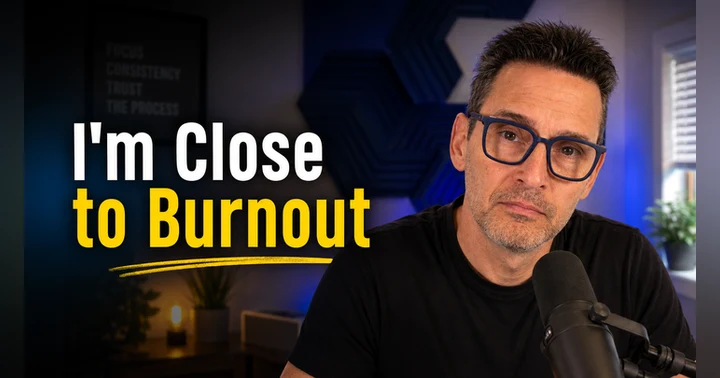
56:38 Lately, I've been feeling overwhelmed again and dealing with a lot of anxiety. I'm trying to juggle ironic media. podcasting, this show, and personal life. I can feel myself getting dangerously close to burning out. And yesterday was one of those days, and I need to listen to my mind and my body and what they're telling me. So this show and this community means so much to me, which made this a really difficult Yes, I know, based on what I shared, this happened.
57:21 the The almost breakdown happened yesterday, and here I am making the announcement today. But I promise you, it was a very difficult decision. I also know that pausing is the healthiest decision that I can make for myself right now. We won't be disappearing completely. We'll continue recording empowered podcasting live every Wednesday at 1p.m. Eastern, and then those episodes will be released. My my target is to release them Thursday afternoons. That means you'll still receive at least one new episode every week, and I'm incredibly grateful to everyone who shows up here, whether you join us live, listen to the podcast, or participate in this community in other ways, so thank you for understanding, for giving me the space to take care of myself. I appreciate all of you, and I look forward to staying connected through Empowered Podcasting Live, through social media, and of course through Empowered Podcasting, the conference coming august 21 through the 23rd in Charlotte, North Carolina.
58:32 So, if you have any questions or thoughts and want to chat about it, you can email me at mark m arc@ironicmedia.com. Ironic is spelled with C K at the end, or you can just go to podcastingmorningshow.com/contact. So I was just going to close, but I Gabe, I saw you came up on stage, I like to give them a So I'm going to do that. I'm going to break what I said I was going to do and give you the mic real quick, Gabe. Go for it. Did you want to comment at all? Gabe: Yeah. Hey, hats off to you.
59:12 I'm kind of finding myself in this same spot. So you being able to be courageous enough to share all of this with us. I just want to say thank you for the honesty and vulnerability and everything that you're putting out there because it is a lot, and I understand what you're going through. I'm visiting these same feelings and thoughts myself, so thank you for sharing that, Mark. It really does help because we're not alone in all of this. That's all I really wanted to say. Marc Ronick: Thank you, Gabe. I appreciate that a lot. And yeah, I thought later time, eight a.m. the summer would be enough for I am just overwhelmed, and I'm things from myself to my.
1:00:02 podcasting. I would say that has not been neglected, and we've got a team, so it doesn't get neglected. But I'll tell you, Moronic Media has suffered because I am just overwhelmed. So, yeah, Gabe, if this is if this is your sign, or if this is giving you the permission, by all means, take that. We preach a lot about consistency and how important that is, but not at the expense of yourself. And that's what I'm taking away from this: is that yeah, I've been fricking consistent. It has been years doing this show every single day, and maybe a revised schedule like we've had three days a week, but regardless, I have been committed and consistent, and I'm struggling, so I got to take a pause.
1:00:49 So thank you guys, and again, feel free to reach out if you have any questions, thoughts, concerns. Happy to hear it, but that's going to be the decision for now, and we will be back at So, until the Empowered Podcasting Conference starting august 21, make it a great August, everybody. Take care.