The Podcast Formula That Made “You’re Wrong About” a Hit
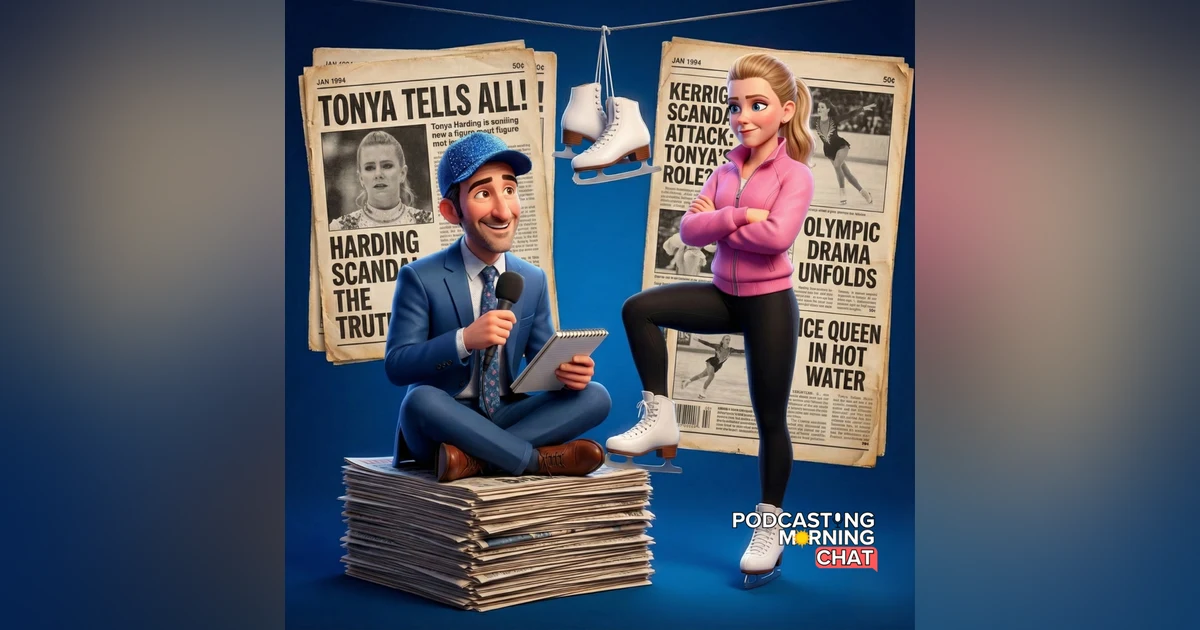


Do you remember when Olympic figure skater Tonya Harding was accused of having her ex-husband, Jeff Gillooly, injure Nancy Kerrigan’s knee before the 1994 Olympics? If you lived through the 90s, this story dominated the news, and many of us formed strong opinions based on a narrative the media pushed at the time. That familiar story becomes the starting point for a deeper look at podcasting craft. Co-host Jonathan Howard, leads the team through a case study of You’re Wrong About, using their 'Tanya Harding, Part 1' episode to examine where the show excels. We explore how the hosts balance deep research with a conversational delivery that keeps listeners engaged. We also look at how intentional co-host roles guide audiences through complex material without losing clarity. Strong podcasting is not about presenting more facts. It is about framing stories with care and purpose, so listeners feel invited to rethink what they know and stay engaged.
Episode Highlights:
[03:40] Preview of the upcoming podcast evaluation series
[06:18] Introduction to the You’re Wrong About podcast
[07:33] First impressions, tone, and host banter
[16:21] A deeper dive into the Tanya Harding story
[27:29] Accessibility and discoverability issues within the episode
[32:53] Empathy-driven storytelling and humanizing Tanya Harding
[41:08] Media narratives and shifting public perception
[49:26] Citing sources in show notes
Links & Resources:
Join The Empowered Podcasting Facebook Group:
www.facebook.com/groups/empoweredpodcasting
Empowered Podcasting Conference:
www.eventbrite.com/e/empowered-podcasting-conference-tickets-1976757134803
Upcoming Podcast For Evaluation: https://open.spotify.com/episode/44Mq04supW81rcuQeAVCB8?si=I-vp9camTrK0bvw1ZX6g6g
You’re Wrong About Tanya Harding Part 1:
www.youtube.com/watch?v=A2CWRSZfApA
The Story Lab with Jonathan Howard:
https://thestorylabpodcast.buzzsprout.com/
To Have Your Podcast Considered For Evaluation, Please Complete This Form:
https://docs.google.com/forms/d/e/1FAIpQLSc8-Xv6O6lrNPcPJwj3N0Z5Osdl-5kHGz_PiAU45U
Our upcoming podcast evaluation, Shared Delights (Wedding Crasher): https://open.spotify.com/episode/1pfvQbyTC2J4j7f07RlgTb?si=DAciGVe4TRqSeyq5Glnb3w
Shared Delights Podcast:
https://open.spotify.com/show/7kGzKPjX13q2r2j9G7MdDR?si=9fb17aeb1020497a
Remember to rate, follow, share, and review our podcast. Your support helps us grow and bring valuable content to the podcasting community.
Join us LIVE every weekday morning at 7 am ET (US) on Clubhouse: https://www.clubhouse.com/house/empowered-podcasting-e6nlrk0w
Or Join us on Chatter: https://preview.chattersocial.io/group/98a69881-f328-4eae-bf3c-9b0bb741481d
Live on YouTube: https://youtube.com/@marcronick
Brought to you by iRonickMedia.com
Please note that some links may be affiliate links, which support the hosts of the PMC. Thank you!
--- Send in your mailbag question at: https://www.podpage.com/pmc/contact/ or marc@ironickmedia.com
Want to be a guest on The Podcasting Morning Chat? Send me a message on PodMatch, here:
https://www.podmatch.com/hostdetailpreview/1729879899384520035bad21b
0:05 Good morning podcasting Morning Chat. Today is Monday, December 15th, 2025, and today we're breaking down the You're Wrong About Podcasts, Clear brand promise, Empathy First storytelling, and how it reframes familiar stories to keep listeners hooked. So if you're listening live on Clubhouse, hit the share button, bottom left hand side of the screen and share it. However, Clubhouse lets you. And if you're catching us via podcast chat or YouTube, Facebook, please share this with a fellow podcaster. Now give us about 30 seconds. We'll get things rolling. Thanks for being here. Good morning again podcasting, morning chat. Thanks so much for being here.
1:23 I am your host Mark Ronik and currently on stage with me. My Co hosts we have producer Ashley Feller, Jonathan Howard, Dr. Faye, Nick Nalback, BC Babbles, Ralph E Step and Sid Meadows. A full house indeed. Thank you all for being here today. And a shout out to our first audience members. One just disappeared on me as I was shouting him out. Tim, who was sitting here chatting with us in the chat, and Bez as well. Good morning to you, Sir. Yeah, And everybody's talking about the wintry weather. Yes, winter is definitely here. And I know I've seen a lot of areas of the country getting blanketed with snow. I was asked before the show started what the weather was like here. And we had some warmer weather here in the Asheville, Western North Carolina area this past weekend. Yesterday it was chillier, like 45. Today, it's definitely cold.
2:17 Tim said it in the chat. It was 19 there. Yeah, it's 19 here as well. OK, before we dig into all of the things, I do want to briefly wish those who celebrate a happy Hanukkah. And I was raised Jewish as an adult, not really a practicing religious person of any kind. Spiritual, yes, but not much as far as practicing a religion these days. But I do like to acknowledge these holidays and they are part of my tradition growing up. And I know it may feel strange to honor a festival.
2:57 Festival of light. While we're aware of the tragedy that occurred in Australia yesterday, Hanukkah is about choosing to keep the light burning even when darkness feels overwhelming. So today, that feels like a reminder worth holding on to as we move forward together. And please, let's, regardless of your beliefs, I do hope that the people listening to this show value and respect human life. And we lost at least 15 lives as of the last time I looked from that tragedy in Australia, and many others injured from that as well. So let's keep those people in our thoughts, please. As far as the business of this show goes, this Thursday is our podcast evaluation series.
3:49 This time we're doing something a little different with the type of show we're going to be evaluating. It's a solo show, but that's not what's different about it. These are 5 minute episodes. The show is called Shared Delights, Your true stories and Funniest moments. Let me tell you just briefly about it. It's a bi weekly and as I said, solo show. It's an audio only podcast for busy humans who want a light, uplifting reset through short, true and funny stories. And since they are 5 minute episodes, we'll try to share our thoughts on a couple of those episodes. But I think we'll have plenty to chat about and looking forward to hearing what the gang has to say about this.
4:34 These episodes they are. I find them fun and entertaining and looking forward to breaking them down and learning from what she's doing right and maybe what she could be doing better. Her name, the host Rica, she's from Hungary, I think now living in the UK and English is not her first language. In fact, it's a more recent language she's added to her arsenal of languages. So looking forward to chatting about that. We'll do that Thursday. And also wanted to just say, since Jonathan's going to be leading the charge today for the obsession worthy podcast breakdown, I do want to first say, Jonathan, good morning to you and wanted to acknowledge you've got a new addition to the family coming hopefully today, right?
5:21 Yes, hopefully today I will be dry. I'm actually leaving right after this, heading down to New Jersey to pick him up. Yesterday, the snow canceled it. Yeah, yeah. OK. And kind of dog. And what are we naming the dog? He is an Alaskan clique, which is a miniature Alaskan Husky, and his name is Jack. Jack Frost to be exact. Oh, nice. So, and now, is that the name you gave the dog or is he coming with that name and you're keeping it? So he had the name Jack I gave him. I was going to name him Frost, but I was like, well, they work together. I love it. Well, good luck. How long have a drive? Is that from New York? Where? You 4 hours, OK? Four hours each way, yeah. Wow.
6:02 OK, that's commitment. But yeah, yeah. And the last question, you have two other dogs. Are you bringing them or is it going to just be the two of you on your ride home? Just going to be the two of us on the ride home unless I convince my dad to drive, which I'm still working on. OK, cool. Well today, Jonathan, you picked You're Wrong About That, the podcast that's been going on for a while now. I know that this particular episode we're going to be digging into is from 2019, but they still have episodes publishing, I believe to this very day. So they've been doing it for a while. And this one is on Tonya Harding. It's a two-part series. We're going to be breaking into Part 1. But before we do, Dr. wanted to say something, so let's check in with her.
6:44 Go ahead, Dr. You were saying that it's been around for a while. You know, as soon as I brought up the episode, I recognized the cover art like right away. Oh, so you've seen this floating around before? Oh my gosh. Oh, yeah. So I mean, that speaks to its branding. As soon as I saw the cover art, I'm like, oh, OK, OK, I know what I'm getting into now, OK. Yeah, I'm really curious to hear other episodes now after listening to this one, just to get a feel for more of what they do. But yeah, they're new to me. I hadn't actually. I mean, I'm sure the name has come up at some point in my podcasting career, but it's just not. It didn't ring a bell and I'd never heard the show before, so I was glad to be introduced to this one.
7:29 Now, I think a great way to introduce everybody to this show. If you haven't listened, that's OK. We want to still, we've got clips for you to keep you in the loop. And I thought this is off script from Jonathan, but he did give me permission, permission to do this. I thought a cool way to do this is let's hear the beginning of this podcast all together so we can get a little familiar. And I have it broken into two parts. So here is Part 1 of the intro of You're Wrong About and that's the episode Tonya Harding Part 1. People do not understand that, like both of us are like curled up in extremely bad recording positions and that like our backs hurt. Like we just have to take.
8:10 A break and that we love Tonya Harding, but we're also in our 30s. Welcome to You're Wrong About the Podcast, where we spin around but always keep our eyes focused on what spot. Wait, wait, no, I get up. What? Welcome to You're Wrong About the Podcast, where we spin around furiously but keep our eyes on one spot so we never get dizzy. Well, I had three weeks to come up with that. You can't look at any one thing when you're spinning. No, but isn't this how they do it to keep from getting dizzy?
8:52 Or do they just get really dizzy? No, I think your inner ear just changes you just when you start doing the fast spins and after a while your body adjusts. Really. I think so. I was also going to say welcome to your wrong about the podcast where we do a triple Lutz through history. Oh, that's nice. I think they're both bad anyway. I like triple Lutz through history, using our toe picks to set the record straight. I am Michael Hobbs. I'm a reporter for The Huffington Post. I'm Sarah Marshall and I'm working on the book about the Satanic Panic. And if you want to support the show, we are on patreon.com/your Wrong About and today we are talking about Nancy Kerrigan and Tonya Harding. There you go, That is the first part of the show.
9:33 Only criticism. I know this isn't technically our evaluation series. And the only thing I didn't love is that music that played during and after the clip. The music, you know, that's their choice and that's fine. And I found that it dragged in between when that little clip played and then when they actually officially started the show. I thought it dragged and it was, it's kind of some people, it may come off as a little bit annoying that that whole thing there. And then the fact that it dragged. I I thought maybe they could tighten that up a little bit. But I do like the banter. I do like them kind of just kicking it off very casually and I like that they made a mistake and they kept it in there anyway and just had a good laugh about it, showing that authentic side. These are great things to think about, even for new, new audiences.
10:27 I think that this helps an audience start to connect with those hosts much quicker, if you will, and they go on and banter a little bit more. But look, I'll say it like this, and I, and I wrote this down so I wouldn't forget. I think the banter at the beginning of a podcast works if it's intentional and it doesn't drag on. I choose to believe that this is intentional, that they do that, that they incorporate a little bit of banter. And I like how also this particular piece of banter ties the actual episode to them. I'll play it right before, right after I hear from BC, Go ahead BC.
11:10 Just want to say before anyone goes out there and starts spinning around, as someone who took modern dance in college, your ear does not adjust at all. You definitely have to pick a see either spot on the wall and keep it focused. Otherwise, your face does acquire an informal introduction to the floor. BC you have some dance experience. I'm not going to say I'm good. I'm not going to find footage of me doing it anywhere. All I'm saying is I took a little class in undergrad. It was a little fun piece, but I did learn that one thing. You better find a spot and keep an eye on it and do not just spin crazy. OK, there you go. Who knew you would come to a podcast about podcasting and learn about dancing? But I guess that's going to happen when you have something like a Tonya Harding episode.
11:54 I know she's not a dancer, but ice skating, you know, similar idea. This is our Ulysses. Yeah, thank you for not psyching me out at all. This is our no hitter. And it's also our 50th episode. It's our 50th episode. Can you believe that we're Golden Girls as of this episode, And even after recording 50 episodes of a show that has brought amazing people into our lives and allowed us to connect with human beings in a wonderful way, I'm still recording on the floor of my closet in my teenage bedrooms. And some things don't change, which is reassuring in this Hurley burly cosmos. But this is, this is like a big episode for us because, yeah, the story of Tonya Harding is like how we met, basically that you wrote this article about Tonya.
12:39 Tonya Harding is the Colin Radio show in the Sleepless in Seattle of our lives. Yes, So background. Sarah wrote an incredible article. What is it four years ago now? That was 5 1/2 years ago. And that is basically how we met, because I wrote you an e-mail after that I had never heard of you and I wrote to you saying you are amazing. I can't wait to see what you do next. Again, love the banter, I appreciate the banter and I love the tie in that there is actually a connection between the two hosts and the Tonya Harding story. As a new listener, they hooked me. I wanted to keep listening after that and they hadn't really even gotten into the main topic other than saying that it's a connection between the two of them. By the way, I'm falling over my words today probably because I woke up around 2:30 this morning and didn't really get a lot of sleep after that.
13:36 So I think my brain is a little tired this morning. OK, so with that, let's go to Jonathan. Jonathan, good morning. Please let's dig in to this obsession worthy podcast. Good morning. This is a definitely obsession worthy. It does a lot of things really, really well. And I just want to comment on what you were saying. That banter kind of floats into the episode because they never get really formal, but they are very, very well informed. So the conversation is informal but well informed and that we'll talk a little bit more about that later. But I personally enjoyed their connection there. And this was like the 5th or 6th episode I'd listen to. So they definitely have that connection. But so the show, just in case you don't know what it does, it digs into the messy, complicated truth behind things that we already think we understand. So it's like journalism, it's like a therapy session for us. It's history, it's all sorts of good things because it really taps into like this cultural tension and we have all this information, but we don't know how it fits with certain things. So it really dives into the nuances of humanity and gives us a lot to to think about.
14:47 And I want to actually say that it nails its brand promise right from the beginning because it's brand promise is you weren't wrong. The world misled you. And every single episode they hit on this. And I think that's something that's really, really important because when we hit on our promise, we are building trust each and every time. So I think there's some something that they do very, very well and something that we can take away from this podcast particularly. I wanted to say I get the impression from reading about the podcast that they are trying to, yes, show us a different side of something that we know or we think we know.
15:27 But I also felt like maybe it was going to be a more non bias approach. But to me it felt like they were. The whole purpose of the episode was is to convince us that, you know, the story we knew was actually not true. So which of the two, Jonathan, would you say they lean toward? I would say they have picked their side and their argument, but I also think that if they were to be fair and balanced in how they presented it, it may not hit as well as it did. Yeah, I think you're right about that, because clearly they really wanted to to show us that there was another side to Tonya Harding.
16:08 And I think if they wanted to kind of explore the entire thing, they would have given us two more, Nancy Kerrigan more. What happened? I think that was definitely purposeful. Let's set up the first clip, which is they start the show from the wrong story. And by wrong story, I mean the story that we all know. In this clip, Sarah setting up the conversation about Tonya Harding, but instead of like diving into her research right off the bat, she actually asked her Co host what he remembers about Tonya. And that's the first clip. As someone who grew up in in the Northwest, because Tonya Harding of course is is from Oregon, did you have an experience of her at the time that she became momentarily the most famous girl in the world? I mean, I think I swallowed the narrative that everyone in America swallowed.
16:58 I mean, it wasn't until I read your piece till I realized how much coded language there was in the story of Tonya Harding about sort of her being trashy and her being sort of skanky somehow. I mean, This is why the piece was so revelatory to me and why I think these pieces resonate so much people now is because all it takes is for somebody to point something out to you. And it immediately clicks that I did hate her because I kind of thought she was white trash. And as soon as somebody points that out to you, you're like, oh shit, that is what I was doing. Yeah, so Tonya Harding became notorious after Nancy Kerrigan, who was her primary rival in the US figure skating world.
17:40 They had been competing against each other for like 7 years at the time. Was assaulted at the 1994 US Figure Skating Championships by someone who appeared out of nowhere and clubbed her on the side. And The thing is, what we all remember is her being clubbed. We don't really remember that. Like weeks earlier, Tonya Harding had completed the first triple Axel ever by a female in skating. But female, US female, like we just remember the clubbing. So by starting with that, it normalizes where what everybody remembers so that when they try it, when they go towards talking about the other side, we still feel seen even though we don't know the other side of the story necessarily. So I think that is a really smart strategy for them to talk about what we know and.
18:33 I what I like also here is that the host and the Co host, they're doing in a way where what, what's the gentleman's name again? Michael. To me, Michael is representing the audience, right? Like he's the one that he's there representing us. He's going to be asking the questions that we might be thinking, and they're really framing it that way. The host is asking, OK, tell me what your impressions are. What do you remember about Tonya Harding? And that really is also a question for the audience that's going to get their heads thinking about it and then hearing probably something very similar when Michael explains his his version of what he knows of Tonya Harding.
19:14 And the lesson from this is that stories can be framed in many different ways, but always lean towards framing the story where your audience feels seen, especially if you're ultimately looking to change their opinion on the subject. So just a strategy that you can use because that way they see that you understand them and they're willing to be more open to seeing the alternative. I think that's a good take away if you have a podcast with a Co host and you guys are covering whatever it is information to think about. OK, who of us today? Because maybe it switches from episode to episode, but you know, which one of us today is going to be playing more of the role of the audience or at least being the the representative for the audience and which one's going to be more of the guide of this episode.
20:00 I think it helps a lot when as far as keeping our audience in mind when we're creating the content. Well, I have some practical ways that we can actually do that. Let's go to Sid. Go ahead, Sid. Good morning. Good morning, everybody. When I realized this was about Tonya Harding, I was like, oh man, I lived through that, right? I don't know that I really want to listen to this. And I'm kind of like the Co host. I thought she was white trash and not worthy of anything, right? This episode totally changed my perspective on that. It helped me to understand her a little bit, what she was going through. I had no idea about the years of abuse. It was also very interesting to hear about the whatever it's the International Skating Federation and how they kind of control you and make sure that you live up to certain standards and they tell you what to do, what not to do.
20:52 Like when she was divorced, Day told her it was better for her image if they stayed married and those kind of things. So I mean, I really enjoyed this. I did not think I would, but I do think that the storytelling on this was like on point. I was captured with this the whole time. Yeah, I agree with you and the storytelling. Yeah, it was on point, and I think Jonathan pointed it out earlier just how well prepared they were with information. They really did their homework, did their research, and it showed throughout the whole episode. I don't know if they were following a script, but I I loved the casual nature of this. A couple of times you can tell they were going in for researchers. One point they watched a video, which is unfortunate for audio listeners, right?
21:37 But I don't know if they were following a script kind of like you follow in the morning Mark what is a run a show? But the casual nature of how they bantered back and forth was very enjoyable. It was very easy to listen to. I didn't feel it at all, like I was listening to some deep scripted show. Yeah, I've got to think that they had notes or an outline or something because. And at the same time, it was very clear that she was a huge Tonya Harding fan, so she probably had a lot of that to memory, too. But I've got to think they had some sort of outline to follow. And yeah, I noticed that point too, where they go to a video to watch something and we don't get to see it when we're just kind of hearing their reactions.
22:20 And this is something to note. They are not a video podcast. They don't do video. And as a matter of fact, you go to YouTube and look at that podcast, this particular episode, and all it is is audio with some B roll going the whole time. I think it's actually of different shots of a record spinning on a record player just at different angles the whole time. So they're very I think they're aware of the fact that you what they're doing. And it still works to me for me, like it doesn't bother me. This is something we've talked about recently. And I think as long as you are making it clear what you're doing, that you you are reacting to the thing that we can't see as an audience, I'm OK with that. It's not going to make me leave the podcast if I'm interested in the content.
23:09 Ralph, I think you had something. Did anyone else notice a little bit of an audio issue between the guy and the girl? I just thought there was a little bit of a opportunity there for them to fix that because his audio seemed a bit lower to me now. I was just, I was just when I was exercising this morning, but I just felt like there was a little bit of a difference there. Yeah, I think. And also his audio was a little echoey. And I'll say this, that this again was from 2019. So I'd like to think that maybe they've made some adjustments, improvements over time, but maybe not, who knows, Maybe that's the charm of their show. It's clearly been working for them, right? They've they've been going on for years and years now and continue to do so. I think they've got an audience regardless of the, we'll call it subpar audio. I did notice that I have that written here, average audio quality.
23:56 And for that matter, let's just say their show notes were super average as well. It was one paragraph basically. And there were some links as well, but that that was about it. And I'm not knocking them. Just just an observation, something to think about. Here's a really popular podcast that's somewhat breaking the rules and doing just fine. They also said in this episode that they were still recording in closets and like sitting on the floor. So they're making it approachable or they've improved. I've listened to a couple later episodes and I think the audio is a little bit better, but it is also just her hosting now. Oh, so he left. He did, yeah.
24:37 She has a guest come in regularly for the episodes but yeah it is just her hosting now. Got it. Shall we move forward? Yeah, let's actually hit the second clip because something that Sid mentioned, I think that is kind of part of my second clip, which is I talk about nerding out, but keeping it conversational. So in this clip you'll notice that the host is totally nerding out about specifics, especially the, I think the triple Axel and the how you actually do it. It's like really nerding out. There's details, names, all that sort of stuff, but it's not a lecture. So let's hit that second one. It's famous for gems. Tonya Harding's calling card was that in 1991 she became the first American woman and the second woman in the world after Midori Ito from Japan to land a triple axle jump in competition. The axle is the hardest jump because all of the other jumps let's toe, loop, flip, etcetera.
25:30 You come into backwards, you skate to get your momentum, you turn backwards and then you take off backwards and land the jump backwards. So you complete 3 revolutions and when you do the axle, you take off facing front and then complete 3 1/2 revolutions and land backwards. You need that much more lift, you need that much more time in the air, so you need that much more power to get off and then a lot of other jumps. When you take off backwards you use your toe pick, which we all know from the cutting edge. It's a little rough part of the front of the skate that. Did I miss it? Did she? Is she a figure skater? I mean, she has to be, right, Jonathan. I mean, it's just unless she's just really good at. She's really good at educating herself and she had is obsessed with the triple Axel.
26:18 Obsessed. I mean, there's a lot of talk about it, yeah. OK, got it. I would have pegged her as a figure skater for sure based on the way she talked. And she goes through this, she explains. This whole clip goes on for a little bit. She explains You know about Tonya being the first American woman, only the second woman after Midori Ito. She lays out Tanya specific history like skating since the age of 3 or 4, competing internationally, skating at the mall, training before dawn. Mom drives her to the rink at 4:30 AM. Like all of the specifics, but it still remains conversational. And Michael, who's the Co host, will interject at times with just some, you know, hey, this happened or this, you know, whatever he wants to respond. But it's normal human interjections. Like it doesn't feel staged.
27:02 It feels really conversational. And then she she randomly drops in some context about the Clackamas, Clackamas County and the brutal upbringing, including Levana, who is Tanya's mother, showing up on the Montel Williams show at some point. So details. Painted as the villain, you know, based on all the stories that were we hear in this episode, yeah. Yeah, definitely a lot of that and but there's just a lot of detail. By the way, real quick, I'm going to steer us off course and back to, you know, we were just talking a moment ago about things like the fact that they have average audio quality and the average or simple show notes. And that reminded me, Nick, you were sharing something about the title because you were having a hard time finding the episode when you wanted to go listen to it.
27:51 Did you want to share a little bit and give some feedback on that? Say good morning everybody. I had a hacked weekend this weekend at packed house. So I was planning to catch some of this episode this morning and when I went looking for it in my podcast Player, I had a really hard time finding it. One, because there are so many episodes and two, there are no episode numbers in the title so I didn't even know where about this. Fell into the whole podcast. So I scrolled for probably a good 5-10 minutes. Jumped between Apple podcasts, the web view. So I'm on Android and back to my show like player just try to find it and I ended up giving up on it. I thought this was a prime example of why it I personally think it is important, especially if you have a long running show or plan to have episode numbers in the title, because I would have immediately been able to just jump straight to that episode instead of spending all those time going back and forth.
28:50 And for this, I put in more effort to try to find it here so that I could kind of be up to date with everything going on. If I'm just a casually listening to a podcast episode, there's no way I put in like really any effort to try to find it. And if I can't find it immediately, I'm skipping. I'm going on. Yeah, I don't understand why these layers, the actual podcast apps, why they aren't displaying the the episode numbers for us. We have to put episode numbers in, right? Like if I'm using Spotify for creators and uploading an episode of the podcasting morning chat, there's a section, yes, it's optional, but there is a section that says that gives you the opportunity to put your season number and your episode number.
29:30 If I'm putting that in there, why aren't you displaying it for me? Spotify and other platforms for that matter? And that's why a lot of us feel obligated to put the episode number in our title, even though some may say it's a bad move, it's a bad strategic move when it comes to SEO. And so I've been back and forth. I've put it in, I've taken them out, and currently we're not using them in the show titles. But I'm feeling really guilty about it. I feel like it, especially with our show that's five days a week, it's really challenging for people to find a specific episode number. And I can't refer to episode numbers because I know it's not going to mean anything to them. They're not going to be able to find it that way. That's a challenge for sure.
30:14 I have a question for Jonathan. Jonathan, do you know when Michael left the show? I don't the. Only reason why I'm asking is because I'm taking a look right now of all the titles and from most recent to least recent and I can tell you that the newer ones like in 20/25/2024, they are not catching my interest at all. And everything around the Tonya Harding era of their episodes are like, oh, oh, look at that one. Oh, oh, you know, you know what I'm saying?
30:54 Something took a change. Something happened somewhere along the line when it comes to their subject matter and their titles. I can tell you I did a little research here on the spot and Michael Hobbs, the host, stepped away in 2021, and the reason was that it was time, According to him, for a creative reset and to focus on other projects. So 2021 was when he left. And he writes for the Huffington Post, I believe, right I. Think he does? Yeah. Yeah, I think so. Titles are probably his strength there. Yeah, that could be interesting. Although really titles, I mean his episode, the episode titles like of this one.
31:37 Tonya Harding Part 1. Tonya Harding Part 2 Not not that dynamic per SE. Even but just subject matter is what I'm saying subject matter? All right, Jonathan, so that was clip. Yeah, that was clip 2. And the lesson really is, you know, it's awesome to do your research but and know yourself, but you got to be able to speak in a way that's approachable to your audience. Because whether they, whether it's, you know, the reading level or the details or whatever you want to do, if they don't feel connected to it, they're not going to connect to your podcast. So really, you can be the bet, you can know all the details and that's great. Just make it approachable. So that was definitely the lesson from that particular one. And if you want, I can give you some tips for nerding out appropriately for your podcast.
32:23 Do that really well here. All the time, yes. Well, and that's the thing. We pick one technical thing that we're really good at and your audience has never had explained properly. And we really kind of dive into those things and we spend real time researching it. But we explain it like we're talking to a smart friend in a coffee shop. We're not given a webinar, right? So, and their bonus if you tie it back to emotions because those always connect better for sure. You want to hit that third clip. This one is where we start to really change, you know, see the different side of Tanya. So we're going to talk a little bit about empathetic and understanding discourse.
33:03 And, you know, later on, after everything that happens, Tanya is banned from skating. And she's also essentially blackballed from professional skating, which is where, you know, like stars on ice where you skate for money. You know, she describes this, and I don't think this is hyperbolic at all. She describes this as her life being taken away from her. And it was like, not only was it her vocation, not only was it where she spent all of her time and dedicated all of her effort, but it was like, this was what she was great at. And she's someone who grew up believing and who was told by everyone who she trusted that she was nothing. And this was something where no one could argue with the fact that she was worth something and that she could do what no one else could do.
33:44 Yeah. And losing that, yeah. Here you go, Jonathan. Even to me, hearing that full interaction was like a gut punch because it was they were very, very good at at you know, obviously they were on the side of Tanya on this, but they were very good at laying out some of the details. And that was like, wow, we really did, you know, she really did lose everything in the in this situation. Now, whether she's guilty or not, she did lose everything and it may not have been fully her fault, but being banned and blackballed for skating is really like because Sonya was spending every spare minute, every spare dollar, everything that she had to skate and she'd been skating since she was 3 or 4 years old.
34:27 So losing that is losing an identity. So we really lies in this moment that like everything in her life was tied to skating and was she dealt a fair hand? And all right, Dr. I'm coming to you because we were chatting before the show and you were listening to this Tanya episode 1 or Part 1. And I had said, yeah, it's really starting to show me a human side of her. And you kind of said, and I'm paraphrasing, you said the jury's out still, right? So I'm curious if your mind has been changed. I'll tell you what, this whole Tanya experience, I mean, because I was certainly old enough to take it all in. And the fallout, I mean, it went on for years and years and it got to be kind of a joke.
35:16 I mean, I remember an SNL sketch, several SNL sketches. And because of that, I'm not even sympathetic to Nancy Kerrigan anymore, just because we were so saturated with the whole thing. Just to give some people context, you may not know that time or wasn't a part of that time. It was like what we saw at the what was it? Which concert was it? The Coldplay concert, right? Like when the when the couple was caught on camera, it was like that and then some, you know, it was just non-stop oration. Is that a word of that story? Yes. It invaded my space every time I turned on the TV.
35:57 There was something about it and I just was. My brain sponge was just way, way too saturated. I hear you so. By the way, Ashley points out that this story was as famous as the Monica Lewinsky scandal. Yeah, that definitely similar as far as saturated, Yeah. All right. So Jonathan, where you want to go from here? So I'm going to push TR a little bit and say there was also several other boldly empathetic moments in this podcast. They empathy is something they did really, really well. You know, they talked about the ruined first date due to her half brother and the cops, and that was crazy. They also talk about, you know, her is a beautiful little Princess, beautiful, scrappy little Princess, which was a really tender moment.
36:42 But the moment that really, truly hit me was when they read from Tanya's autobiography and she writes, my mom hit me and she loved me. So when he hit me, I thought he loved me. And that was like. Wow. So they did empathy this podcast. Empathy is like where they shine. They started out by treating the, you know, Tanya as a person that strives and they try to tell her story and they correct the false stories that were out there or the flat out bias. They do this really, really well in say in willing to share the villains side of the story because a lot of these stories there was a villain.
37:28 I mean, we can look at even the Monica Lewinsky 1. Monica Lewinsky was the villain, you know, So there's telling the story of the villain in a way that opens our eyes. These are good lessons for sure for us, right? It's like, yes, doing our homework and having all of the information, but really being able to humanize the story and not just spit out a bunch of facts, but, you know, show that empathetic side of the story too. Because as we know, emotion is really the driving factor here. When it comes to whether or not you're going to be obsessed with the podcast, If you can be emotionally tied to it, that is a sure bet that your podcast is on its way to becoming obsession worthy. Well, Madam Dr. is being a skeptic over here, so I want to ask her.
38:14 You're having a hard time thinking she actually wrote that. I mean, that to me, that segment was like a gut punch because I thought, wow, you really don't know what people who have been abused either physically, emotionally or mentally, you really don't know what they're going through. And I can certainly see the parallel that she believed that abuse from 1 equaled love. So abuse from another would equal love, right? I mean, I can say I can certainly see that. So, Dr. You're being the skeptic. I am. I just don't feel as though she wrote that book on her own. When I see her in interviews, when I see her doing media stuff, she's not that eloquent, she's not that prolific. She's just not.
39:01 Somebody could have written it for her, but like that's so she experienced those things. Right, that's what I was going to say is I know that there are ghost writers all the time out there, right? That they are capturing the story. Look, it's like AI, right? We're we're using AI to help us tell our stories, right? I use AII, take the transcripts of our very words, then our very thoughts and ideas and insights sites, and I have it. Help me craft a post for LinkedIn, right? And not every word in those posts are mine, right? Like I'll write the post and then I'll have it rewrite it, or I'll have the transcript and I'll have it start a first draft for me and then rewrite its first draft. So you know what's the difference really, right?
39:44 Yeah, so in my head. So in my head, I am seeing someone write this book entirely, and she's reading it. And she says, oh, yeah, that sounds good. OK, that's a good part. No, take that out. Yeah, that's a good part. That's a good part. So that's what's going on in my head. And if people would like to join me in my head, go right ahead. I've learned working with Dr. over the past couple years that what she's a skeptic and once she is skeptical it's very hard to change her mind. It doesn't matter what logic you give her. OK. Sid, did you? Were you going to say something? And then I said shocker. All right, So the one thing that I wanted to say about this is when you're dealing with difficult moments and obviously you're being empathetic, but one of the most important things is allow them the space they need to land. So when you're taught when they did this very well, but just keeping in mind that it needs a little bit of space. And a lot of times we edit our podcast to take out any of the space, and that's going to actually negatively impact these things landing and making the impact that you want them to have.
40:50 So just a little note on that. The only other thing was that not everybody else, everybody's normal is your normal. So empathy requires you to be willing to look at the life of another person in a different lens. Trying to put them in your shoes is not going to be truly empathetic because that's not what they experienced. Let's hit on the last clip that we have. That's definitely the moment that they reframe the Tanya and Nancy from. Good girl. First trashy villain into something else. It was sort of two versions of femininity. It was like, I remember Nancy Kerrigan being this like beauty pageant queen. She was conventionally attractive. She was like graceful. She had all this all the feminine stuff that we pack into figure skating and then we expect of Figure skaters, that daintiness, the sort of slow, graceful ballet style movements.
41:41 And then on the other hand, we've got Tonya Harding, who is kind of seen as like somewhat more masculine. She's more powerful. She's sort of a little bit more like thickly built, like she's less conventionally Abercrombie and Fitch attractive. And so no one ever put it this way, I don't think. But this like the way a woman is supposed to be. And then this like usurping force of femininity of like there's this other type of woman who is like doing womanhood. She's like Bane or something. Yeah. And it's so amazing because the rhetoric of the time is so sad. Like, no one ever came out right and said this, but it was always implied that she was somehow monstrous. And she was this, like, 23 year old girl with, like, blonde hair and a big ponytail.
42:27 She was 5 foot one. She was like 100 lbs and. Definitely seeing the the two sides like you're saying. And Mike kind of talks us through how Nancy was that elegant Princess and Tanya was crude. She was too muscular. She was a working, working class skater is what they referred to her as a lot of times, which is practically calling her white trash in a nicer way. They talked about a lot of the details and what it means. But in this moment, I was suddenly hit with like, this realization that I hadn't made-up my own mind. I wasn't looking at facts. I was told what to believe by the media at the time. And it wasn't based on the truth. It was based on on the story that they wanted to put out there.
43:11 And that's what this podcast does, is it? And does it very, very well. But it's reframing morality in a lot of ways because we're looking at what's right and wrong and, you know, looking at maybe facts. And I know Dr. and, and I get it, Dr. And I, I say this, not everybody's going to come all the way to the other side and see Tanya as, you know, the hero, because there was a lot of stuff that happened there. But it does give us a different view and it makes us look at ourselves and how we decide what's right and wrong. This shows also how we allow the media narrative, right? Like, and it's showing how podcasting is changing where people are getting their information. And it's not really showing that, but it's a reason why I think we're starting to see people shift from getting their information and news from traditional mainstream media and they're going to alternative sources, whether it's TikTok for their news or a podcast to get more in depth analysis, information, insight, etcetera.
44:15 This is one of the reasons why I really appreciate podcasting is that it gives us different narratives and not just one that's being shoved down our throats. So I know this is a 2 parter and this is part one. I'm not sure if I'm going to listen to Part 2, but even as a skeptic, I still want to know, and I'm hoping that Tanya is making Does she have money coming in? Is she making a living for herself? I don't want to know that she's living in a you know what I mean? I want still to know that she is productive and still going. Does episode 2 let us know how she's doing? Well this was back in 2019 so does anyone know how she's doing now?
45:04 I don't. No, I have not. Actually. Now I'm interested. Now that you say that it's true. It's where is she now? Yeah. I don't believe that she has overcome all of the the negativity from this experience and I know she seems to be making a living. Here's what Gemini says when I did a Google search. Oh good, it says. As of late 2025, Tonya Harding lives a quieter life in Southwest Washington, near Vancouver with her husband Joseph and their son, working as a custodian, painter or hardware clerk while recently returning to the ice for fun and engaging with fans online, particularly on X. It sounds like she's living more of the, you know, everyday American life.
45:49 And that's particularly greeting to me because she was extremely talented and I at least want her to be like, to teach or to coach, you know what I mean? Now, Dr. Did you feel that way before listening to this episode? Would you have felt that way if I? Brought her. Up you would. OK, yeah, I did. Yeah. Even though I was a skeptic on the entire situation because I was so saturated with it, I still want to know that people came out on the other side of it still. Yeah, recovered. Recovered, Yeah. Got it. Well, I mean, look, all we got were were facts there didn't say if she's happy, unhappy, etcetera. But it sounds like she has moved on and is living her life and revisiting ice skating and having fun doing so. So there's that's a positive step in the right direction. Anything else, Jonathan?
46:37 I think that this podcast serves a great reminder that not all is as it seems, which is why, you know, having the alternative media is very useful. And we may still view Tanya in a negative light like Dr. does, but you can also see that there's more than one side of the story and the story that we were given wasn't. It's the full truth. So as podcasters, we may not view what we do is important, but we do share stories, connect with people, and have a bigger impact than we even know. So be aware of your impact, respect the people you serve, take the moral High Road, and always be willing to accept that you are wrong about something. Agreed. And as far as podcasting goes and those takeaways, we heard the clear brand promise and the but more importantly that it builds trust and we got context.
47:28 We got the idea that context creates understanding, right? In other words, we could tell they invest a lot of time in the background, the lived experiences in the systems, before focusing on that headline moment. That's the approach that helps listeners understand how events unfolded and why they even mattered in the 1st place. And of course, we learned about the empathy. That empathy strengthens storytelling and they man, did they have a lot of stories. So I think that all of this is is stuff that we can really stop and think about. Are we applying these sorts of things? Are we applying empathy? Are we creating context that makes makes it better to understand?
48:12 Is it is there that clear promise out there so that we can build the trust? These are the things to think about. To piggyback off of that, you know, I'm looking at all the titles and the dates that these were and it looked like it's like once once a week, maybe once every two weeks. It's kind of inconsistent, but I would be really interested in their workflow because the detail is so incredible that, you know, I don't know if it was at that time, if it was both hosts working on or if it was just the female that had this incredible knowledge and, and did all the research on this. But there was a ton of research done on this. And again, some of it may have been from the movie I, Tanya that came out six months before.
49:06 And, you know, Ashley points out something, too. She would like to have seen their sources cited in the show notes. I think that would have been helpful. Yeah. And I don't know, Dr. I'm. I'm inspired. Maybe we'll reach out to the show, reach out to this host and see if we can learn a little bit more about her workflow, if she'd be willing to. Share it with us. Yeah, that'd be awesome. Yeah. Well, Jonathan, thanks for another successful obsession worthy podcast. We will revisit these in 2026 because as I've shared recently, this is the last week of podcasting morning chat for 2025. So yeah, we will keep doing these in the new year. I think that we've gotten good feedback from our audience.
49:48 And thank you, Jonathan. Appreciate you digging into this one with us. Thank you. Thank you. Good luck with I'll get some ready for for 2026. Thank you. Keep us posted. I'm sure if we're following Jonathan, we will get as many updates as possible there. So check Jonathan out on social media, Instagram, etcetera. And we're back tomorrow and every day the rest of the week, 7:00 AM Eastern live on Clubhouse, YouTube, Facebook, all the things. And of course, if you can't catch us live, you can catch us a couple hours later on your favorite podcasting platform. And of course at podcasting morning chat.com. It looks like we're don't have enough time to bring on bring up people from the audience, so please forgive us for that. We will make sure tomorrow we leave more time and more conversation tomorrow during the show. So until then, make it a great day. Everybody take care.


