342 - Podcast Guests Gone Wrong

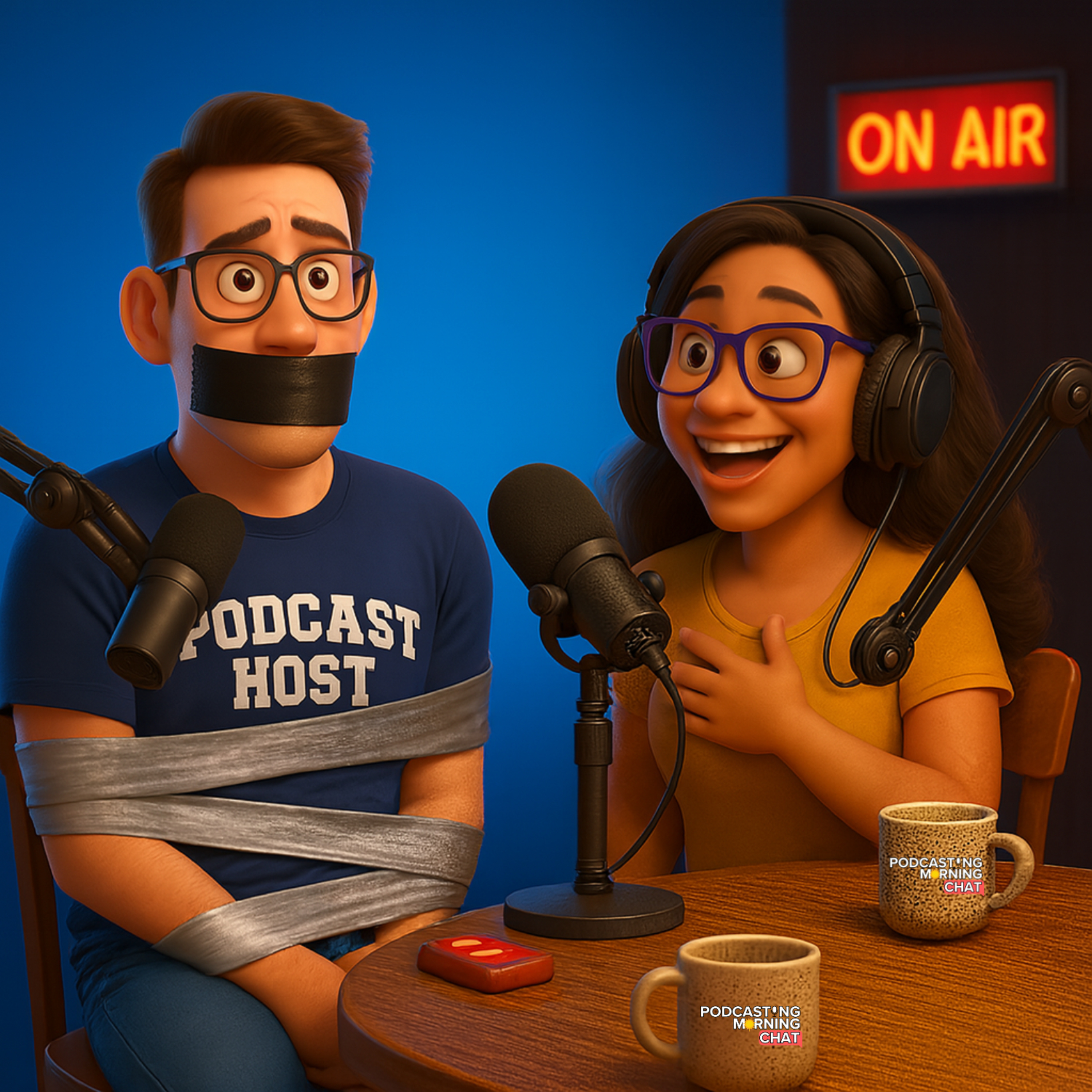


You're at the start of recording a podcast episode. You ask your guest a question, and they go on a 10-minute tangent; you can't get a word in! What do you do? Today's question is inspired by our virtual mailbag, and we’re giving our takes on how to manage conversations with guests and also know when to make edits to clean up the message for our audience. We cover how to redirect a rambling guest and what we've done in our personal experience when this happens. We also touch on the crutch words we sometimes lean on and even call each other out in a friendly way. Listen in for tips on reducing your crutch words and how you can communicate in a more impactful and concise way.
Episode Highlights:
[02:32] Verbal Crutches: What Are They?
[04:50] Personal Experiences with Verbal Crutches
[07:00] Strategies to Overcome Verbal Crutches
[15:54] The Importance of Editing and Awareness
[21:19] Listener Interaction and Microphone Talk
[23:56] Dealing with Difficult Podcast Guests
[24:30] Handling Rambling Guests
[25:03] Techniques to Regain Control
[26:09] Interrupting with Tact
[34:26] Pre-Interview Strategies
[37:47] Knowing When to Reset The Conversation
[50:16] Preparing Rescue Questions
[50:44] Double Editing and Salvaging Content
Links & Resources:
The Podcasting Morning Chat:
Join The Empowered Podcasting Facebook Group:
www.facebook.com/groups/empoweredpodcasting
Get Your Tickets for The Empowered Podcasting Conference:
Vote For Podcasting Morning Chat for People’s Choice Award:
Join Us On Chatter:
https://preview.chattersocial.io/group/98a69881-f328-4eae-bf3c-9b0bb741481d
Remember to rate, follow, share, and review our podcast. Your support helps us grow and bring valuable content to our community.
Join us LIVE every weekday morning at 7 am ET (US) on Clubhouse: https://www.clubhouse.com/house/empowered-podcasting-e6nlrk0w
Live on YouTube: https://youtube.com/@marcronick”
Brought to you by iRonickMedia.com
Please note that some links may be affiliate links, which support the hosts of the PMC. Thank you!
--- Send in your mailbag question at: https://www.podpage.com/pmc/contact/ or marc@ironickmedia.com
Want to be a guest on The Podcasting Morning Chat? Send me a message on PodMatch, here:
https://www.podmatch.com/hostdetailpreview/1729879899384520035bad21b
0:04 Good morning podcasting Morning Chat. Today is Tuesday, July 22nd, 2025, and today we're cracking open the mailbag to tackle one of the toughest posting challenges. What do you do when a podcast guest just won't stop rambling and won't answer your questions? So if you're listening live on Clubhouse or Chatter, hit the share button. Bottom side of the screen on Clubhouse and top of the screen on Chatter. And if you're listening via podcast, share this with a fellow podcaster. And now give us about 30 seconds and we'll get things rolling. Thanks for being here.
1:20 Good morning again podcasting, morning chat welcome. I am your host Mark Ronick and here on stage with me my Co hosts. This is going to be a little weird. We have Ashley Feller, Amanda Sharp, Dr. Faye, Nick Naul back and Jonathan Howard. I say this is going to be weird too and it's really for those who are live because we are in fact streaming live from Clubhouse per usual. We're streaming live from YouTube per usual, and for the first time streaming live to Chatter. Because not only am I streaming to Chatter, I'm also using Club Deck which is a third party app.
2:04 It's a desktop app for your computer to manage Clubhouse and a lot of people on Clubhouse use it, but it's not something that I've normally used. I've had it and I've maybe played with it once or twice, but it's completely new to me too so bear with me. Yours truly is also an ADHD year, so when a lot of moving parts are happening, you may hear me talking out loud. I'll work on that. Speaking of working on stuff, I think most of us here are pretty familiar with verbal crutches, but just in case I'm curious if somebody on stage would be so kind and explain what what is a verbal crutch? Who would like to Dr. You want to take it? Sure.
2:53 Well, there was one right there. Yeah, that's the number one verbal crutch. That's the number one I did #1. Well, wait, that's a whole other thing. That's that, that is a whole other thing which I'm always very happy about. So also I say I have found myself saying so so so a lot and it bugs the crap out of me when I hear it back. I usually cut all of those out. I had a client that would say so, so many times that I had a little library of words that she would say during podcasts like Anne because, well, anything like that.
3:49 I made a little library and if she said so too many times, I would take one of those words and replace it. That's cool with with what? With those little library of words that I she had, she would say it organically in in a conversation like these different words. And I would say that's a good one. I think I'm going to put that in the library. So I would keep these little library of bridge, I call them bridge words. And yeah. And so it worked out really well. Now I will say over the, I guess we've been together for two years now, she has gotten a lot better.
4:32 I haven't had to go to that library in several episodes now. So there, there I go. So yeah, it's hard. You did it. You did it just there. So. Yeah. And another one. And so and so is another one. I heard you do that. And and by the way, I fully admit I have my own set of crutch words and I want us to all share what we think our own crutch words are. So Dr. what? What's yours? Other than maybe the umm and the so. And then we're going to get, we're going to go to Ashley. Maybe it's not a word. Maybe it is a sound I get? Like that little ticking sound you like kick your mouth. Right. I call them mouth noises.
5:13 Yeah. So there it goes again. Now you're going to make me conscious. I know every single word. I know that was the danger of this conversation. I thought about it because we're going to make ourselves so self-conscious here, but that's OK, That's all right. I think that's part of the exercise because I do think creating awareness around those crutch words is the first step and it's very be helpful. I know from my experience of editing years of myself, podcasting, it brings that awareness to me. I, I learned what those crutch words are and then I start to notice them when I'm using them in real time, not just in recordings. So when I'm in a discussion, even with my wife, I'll start to notice those crutch words because of all of the editing I've done of myself over the years. So yeah, I do want to make you guys a little bit self-conscious.
6:11 I think that that'll help you in the long run. OK, let me check in with Ashley. Ashley, good morning to you. So what say you? What are some of your crutch words? Good morning. In my opinion, crutch words or phrases are our go to phrases that we use when we're processing because sometimes our brains can't catch up with our mouths or vice versa. And I found that my crutch words, I got one, I know I got it from my father. And that is I'll give you a for instance, I find myself saying, I'll give you a, for instance, so often. And like you were saying a moment ago, when you edit your own stuff, you really become aware of how often you lean on those phrases.
6:54 And of course, being a Southerner, I, I probably say y'all more than your average bear. So those are my 2:00. And if you're trying to get around so many crutch words or phrases, I think the answer is to slow down. Yeah, I think that's a big one. And it's one that I struggle with in the sense that I do slow down. You hear me? Probably pausing a lot, even sometimes in between words of a sentence. And I'm doing that on purpose so that I don't use a lot of Umm's. And and is one of my crutch words. I sometimes replace umm with and and. I hate saying it, but it's true.
7:37 I hate saying it because I just build not only my own awareness, but I'm building your awareness around my own crutch word. But I know and is one that I use a lot and that one has been the most challenging now for me to tame because I think it works on occasion, but I think I say it too much. I'm in the same boat. With that, well. I think I will basically turn 1 podcast episode into an entire sentence. Yeah, I've been guilty of that too, Nick. So true. All right, I'm going to go to Jonathan who's over on Chatter. Manning the Fort for me, by the way, Manning the Fort, That's a little of an outdated term I recognize, so please forgive me.
8:23 He's watching over our chatter room for us. So Jonathan, good morning again to you. Thank you for all your help this morning and getting up even earlier than you probably normally do. I appreciate you and I appreciate all of your help. So what's a crutch word that you use often? So I use sew a lot, as a matter of fact. When you came in. Yeah, when? You just came in with your answer. Yeah, as a matter of fact, the first time I did Riverside, it had over 100 instances of SEW being removed from my my recording. I was like, wow, I really lean on that one a lot. The other one is yeah, I stumble on yeah a lot. Yeah, this is.
9:11 Yeah. I just did it for you. You're making me do it now. Exactly. Exactly. OK, cool. All right. Jonathan knows some of his crutches and one of the crutches, I'm going to call it a crutch. Jonathan that you do that I notice. And by the way, let's all call each other out in a the most friendly and loving way, OK? Like, I don't mind if you want to call me out and let's just, let's just do it. And I think actually this next what I'll call crutch phrase, crutch term crutch word that I notice you doing. Jonathan, that I actually think works fairly well because it helps reset the question. But I, I tend to notice and I don't think you do it on purpose. I tend to notice that you will repeat question. If I ask you a question, you'll repeat what I just said. Do you recognize that?
9:59 I do. It gives me time to think. I actually do usually do it on purpose. Yeah, I think that's awesome. And again, this is just from knowing you all so well and doing this every day of the week pretty much with the exception of summertime, doing it four days a week. But yeah, I think we just learned these things about one another. Amanda, I saw you had your hand up. Did you want to jump in on this? And are you going to share a crutch word that you use often? So I worked really, I mean, I said so there, but I feel like I worked very hard to eliminate that, those crutch words years ago when I started doing videos and I would listen to myself back and I would look and go, oh, I said maybe like too much or so too much, you know?
10:40 And I think there are certain words that are just part of a conversation. So every time we say like, it's not a filler word necessarily, or so it's part of the sentence appropriately. But I think, and when I look back, no, I know I consciously worked on that so hard when I was starting out the video because I would listen to myself back and I'd go, Oh my goodness, I got to stop saying those things. And I kind of did. I mean, I got to say, Amanda, you're probably one of the few on stage and that I see in the audience as well that I can't really pinpoint A crutch word. So I think you do that pretty. I think you've done a good job of getting rid of any of the crutch words you used to use. And it's not from lack of trying, it just didn't naturally happen.
11:27 I mean, I definitely, I want to say I worked on that. So I'm an example that anyone can work on it and get better at it if you want to. Some people are fine with the filler words and that's OK. But I think the the ability to get rid of that habit is there for everyone. So by working on it, maybe, maybe you said it and I missed it. And please forgive me if that's the case, but what what did you do specifically to work on it? Was or was it just what I was saying earlier, just an awareness that you were able to manage it based on the awareness? It probably became a hyper awareness of what I was saying, but also I think I allowed myself to practice the pause or delay a little more before speaking, which gave me a better chance to start the sentence with a better word than the the so let me think here type of thing. I could go into an answer that didn't have those filler words in it.
12:27 That's cool. So hopefully that's some advice that some somebody may be able to take and run with for themselves. Appreciate that, Amanda, anyone else want to share crutch words while on stage? If you do flash that, if you're on Clubhouse, flash that hot pepper since they took away the hand waving from us. But if you're on chatter, you can always raise your hand and come up on stage and you can raise your hand on stage as well. I'm looking at the chat. That was what I was doing. Again, bells and whistles. Lots of them in multiple places. So bear with this ADHD brain of mine. I know Ashley pointed out Sid often says that's a good question.
13:08 And to me, I wonder and I wish he was here, but he's enjoying some travel abroad. I think that that is intentional. I get the impression that he does that on purpose. I feel like, and I can't recall for sure, but I think that is a practice that some people do to kind of acknowledge the host and their question, if that makes sense. Just a way to validate It's similar to Jonathan's repeating the question. Yeah, exactly similar idea. Time to think. It's more of a strategy I would say than a crutch. Yep, I would agree with that. Anyone else share anything in here? Dr. has been peppering.
13:49 Dr. Well, she might have now kitchen time, I know, but go ahead, Dr. Well, I'm walking to the kitchen. Yeah. But I wanted to say when you talk to a teenager, a kid, they are full of like, like, like, like, like, like every other word is like. So it's interesting. At what age do we naturally outgrow that? Oh, I don't know that. I don't know that everybody naturally has outgrown that. I've never heard like AI don't know a 70 year old. Like like like like like like. Yeah. And I think that that's because that that's a generational thing. In other words, I think those baby boomers, basically, I think when they were growing up that wasn't a thing to use. Like, right.
14:36 Like came from the 80s in my opinion because of the whole valley girl thing. I think I was saying like a lot when I was really like in high school in the 70s. But maybe then it really picked up a beat come the 80s with the whole valley girl thing, 'cause I really feel like that's where it was born. But yeah, OK, fair enough. And I know you have to go make some eggs as well, so go for it. And I want to welcome Mike Short, who's also on Chatter, and Melissa who's on Chatter as well. Good morning to you all. Thank you for being here on our inaugural morning over on Chatter.
15:18 Did anyone else want to share before we dive into the next mailbag question? I think everybody has their little, if you want to call them ticks or repeating words that they use. I think to Amanda's point, you had to have to work on it, and most of the time we didn't realize we're saying it until we start recording. I think that's the biggest thing. You normal speak, you're not going to really think about it. There's some quote UN quote repeating of words that people do and it flows well, like I just said right now. But when you're recording, or I should say when you're editing, that's when it really does this thing that is so annoying when you have to pull out all those likes and all those arms and you knows, because there's some of the ones that I just love saying. And what's really funny is before I started using the script, what's very interesting is when you're editing, I know Ashley and I know Dr. can appreciate this because I'll use Audacity.
16:24 It looks like a certain shape on the on The Voice thing so you know exactly what it is. You're talking about the when you're editing those waves. Those waves. Yeah, you. Just fell and it's just awful friend that you don't want to look at. I think there is some valid times when you need to put them your keep them in. That's why unfortunately, when you edit and this comes back to good editing, you actually have to listen to the the episode. I mean, all the AI, maybe the AI is going to get so good that and maybe it is good so good that it's going to know how things work.
17:05 But you still have to listen to the episode as much as you don't want to after you just did the episode. Even if it's on two times the speed or whatever it is, we still have to look at, we still have to look in the episode because there are situations where you have to keep them in. It just makes things flow and plus you don't want to also take away the person's personality. It's an interesting dance you have to do. That said, like Amanda said, you know, a good pregnant pause is always great. And that's something that we can all look at and and use because I'm trying to be intentional by doing that.
17:46 But it does give you a sense of getting your thoughts together. And people are so worried about Dead Space, and sometimes Dead Space isn't a bad thing. Agreed. Jonathan, you had something. And actually, before I go to you, I just want to say a big thank you to Leah, who's on here on stage with us because she's the one that really helped me make this happen here on Chatter. She Jonathan, connected me with her. We talked and she sat down with me and helped me get this whole thing set up. So big shout out to you and good morning. Let's let's hear the voice behind the person I'm giving kudos to.
18:27 Good morning to you. Good morning to you. I'm so glad to see you here. We've had some people pop in and out. Very exciting, can't wait. You guys have like. OK, I hate to say it right because I I haven't been to your show before. This is all very professional. Look at you, I love it so much. Thank you. Thank you. Well, and the little very quick back story is, is that I am a long time talk radio, especially morning talk radio fan, love those morning shows. I mean some of them can be a little over the top, but the ones that I find that I enjoy, I really love a good morning show on the radio in the morning. And so there is certainly a lot of that kind of influence that goes into what we do here on the podcasting morning chat.
19:13 So I appreciate the the recognition, the validation that it's, it appears that we're professional. I'm not sure if. I'm really more than appears more than appears, and I can. Your voice is very good for rate like you absolutely are. Are are playing the part and it looks very. Believable. Thank you, I appreciate that and that always makes me laugh because I of course, and I'm sure this is relatable to many people. I really I can't say that I don't like the sound of my voice. I just don't believe I tell myself it's not a voice for radio. I tell myself I don't have a good quote UN quote radio voice, yet people constantly say Mark you, you play the part well, you have the voice.
19:58 So who knows? I think that's honestly from. From years of working with radio professionals who have these deep booming voices and also who probably had used to razz me a little bit about not having that kind of voice. Although as I've shared with some of you before, one of my radio mentors, his radio name is Buzz Burbank. His real name is Michael Elston. He always had told me not to listen to that noise and instead just recognize it's not the sound of your voice, it's how you use it. And I know that there's a sexual term that goes similar to that, but it is true. It's really more about how you use it. It is not necessarily about the sound, the tone, etcetera. And we can all improve that as well. And maybe that's a whole conversation. I really got to get a voice coach again to come in. We had one a while back and it would be cool to have another one to come in and talk about that specifically. OK, so sorry to cut somebody off. Who was it was Jonathan.
21:00 Let's go, go to Jonathan. It was me, yeah. No, I was just going to say that even last week Sid recognized me for my pregnant pauses and pacing of my episode for my first episode of my SO. Yes, there is a place for it, and sometimes somebody will recognize you for it. 100% Before we dig into the mailbag, I want to stop and say hello to Hillary who is on stage on Chatter. Good morning Hillary, would you like to add to the conversation or if you have any podcasting related questions, you're more than welcome to ask them while you got the floor. So go for it. Good morning. I'm going to hold off on that and I do have a lot of questions, but I don't want to disrupt until you guys have gone through, you know, everything you had planned.
21:44 You mentioned voice coach, which is why I was like my ears perked up. I'm a casting director over to be and I do voice acting. So if you if you really are serious about needing somebody, I've got a couple of really amazing people I could suggest to you that have really launched my career and in voice acting. So yeah. 100%, Hillary, I would love to have a conversation with you and maybe you yourself if you're interested, you might be that person. And if you have others that you think are even more qualified, by all means. Yeah, let's talk about it. I would love to do that. And here on the podcasting morning chat, anybody is allowed to interrupt the conversation if they have a podcasting question. So at any point, you are more than welcome to chime in. So if you have one pressing right now, you can go for it. Otherwise, I'll keep things moving and dig into our mailbag. You really want to know what mic you're using right there, because that thing is gorgeous.
22:40 Thank you. This is the Shure SM7B, and it is really, especially in radio. It's the industry standard. It is not cheap, but it is certainly not the most expensive microphone out there. There are microphones you can get for thousands of dollars, but this, this is a $400.00 microphone and it has lasted me probably about a decade. Hillary. That's like the worst question because he could go on for four hours about micro. It's a very good question. It's just that, Oh my God, we'll be here all day about wonderful. Without crutch words, he won't even have to use crutch words. That's. Right. No, he won't. He'll just keep going. That's right. He is like a total. He's never seen a mic that he didn't want to buy. That's pretty much the truth.
23:25 Well, that's not true. There are some mics I see and I'm like, no way, no thank you. But I am a bit of a junkie. I love microphones and I know I'm not even the kind of junkie that knows all the insurance and outs and how they're made and all that. It's just I love a good looking mic that sounds really good. And that's the sure SM 7B for sure. And there are some newer models than this one out now since I got it about a decade ago. But yes, I highly recommend it if you're very serious about your audio quality. It's definitely, in my opinion, one of the best. OK, so verbal crutches. We'll put that to bed for now. And let's talk a little bit about this question. It's from Chris Baker, and Chris Baker posted this in our Facebook group.
24:10 He said that every once in awhile I have the podcast guest from Hell. I always have guests. Most of them are great and I feel like I made a new friend. The guest from hell always does the same thing. I ask the guest a question. Generally it's good to have guests who want to talk. However, these guests hardly answer the question. Then they ramble onto random tangents for 8 or 10 minutes. Is that really true? 8 to 10 minutes of non-stop talking from a guest. I bought a guest I brought. Sorry. I brought a guest on and figured we might go for two or three hours. By the end of 1/2 hour, the show had become a type of torture. I figured, quote, if I hate doing this show, my audience will hate it too.
24:59 I figured out a way to get out of the show gracefully. What do you do with rambling guests? Should I just interrupt them? What is a good way to take control of the room? I haven't decided if I'll post this show or not. So. So. Oh, man, See that? That's the danger of doing a crutch show. All right. Anyway, what say you? What do? What do we do? Has anybody here on stage had that guest that just disappointed you? You brought them on, You thought it was going to be a great interview, and they're either talking too much, they're not answering the questions, their answers are subpar. What do you do?
25:44 Hey Mark, does this rag smell like chloroform to you? Thank you, Hillary. That's one way. That's definitely one way to do it. Not one I recommend, but that's certainly one way you could do it. Who else? Who else has got some thoughts on this matter? So I will share what I shared this morning because I couldn't behave not answer the question this morning. So usually what I do is interrupt with their name. So if Mark was talking and when I would mark, mark and get their attention, then I edify their point. Whatever they said, find something good about it.
26:24 So you edify their point, you make them feel good about themselves, then you pivot and keep control of the conversation. So wherever you want to go next, pivot and then don't give it directly back to them because if you give it directly back to them, they're going to continue with their ramble. So kind of have something to talk about, you know, pivot to whatever the topic is, ask a different question, connect it differently, and then try to give it back to them. OK, I like that. Yeah, I think that part of this is about it's the fact that it's your show, and if it's not going well, it doesn't. And meaning the guest is not doing what they're supposed to be doing, it is your responsibility and your right to get it back on track. And I think that, yeah, going to them and stopping them, I like the cue of saying their name and interrupt to interrupt them. I think that that's very a valuable tip. And sometimes, especially if you're doing this via video, sometimes just holding up a finger and gesturing with your eyes, right?
27:31 And sometimes also just making it look like you're going to say something or that you want to interject, you know, sometimes that's just a lean in. But I think those kinds of cues I think are really helpful. Hillary. Which finger should you hold up? Yeah, it depends. It depends on what they've actually said. So Jonathan has said take control early, interrupt them, maybe use their name to first do that and then just say something like, I appreciate what you're saying or that's a good point. Maybe if it's not a good point, maybe you don't want to encourage it and say that. So maybe you just say, you know, thanks for what you're sharing. I want to come. I want to come back to my original question, right?
28:13 So now what you're doing is you're queuing them. You're saying, OK, thanks for that insight. But now let's get back to the question that I wanted you to actually answer. I think that helps a great deal. And Hillary, do you still have? Did you have something else you wanted to add? One of the things that you try to I try to keep in mind when I'm, I used to do just bands, local bands and whatnot. We interviews and sometimes they spiral and they need to be interrupted because they don't know we OK in radio, you are trained not to ever have dead air. And so if you look a little disinterested or they think it's not time to stop talking, they'll keep going. They need you to stop. They want you to say something because they're spiraling and jumping in there and saying something, anything along the lines of oh man, no, I get that. I've been right there.
28:56 I understand completely what you're saying, but help me out here. OK, So when the question when he asked this blah blah blah. So as far as that's concerned, like how would you get into this situation or what did you do when this happened? You know? And so I acknowledge what they just said. I usually try to relate to it in some way and then quickly bring it back to the question and put it back on track. Because usually they just do not know what they're saying or when to stop and they're scared to stop because they feel they haven't gotten to their point yet or they haven't answered the question. So you bring them back to the question and they're able to answer it. Absolutely, 100% I am with you. Like you did just right there.
29:37 Exactly. Go for it, Ashley. I wanted to say I agree with Jonathan's technique, but to also possibly add with that after you find a way to interject, whether that's making a gesture, snapping your fingers, maybe giving some kind of a look, maybe give them a question that catches them off guard to kind of slow them down a little bit. And then like you said, make a couple points about that and redirect them back to the original question. And I also wanted to say to like, I'm so sorry, I can't remember the name from the other room, but I've had Hillary. Thank you. I've had that exact situation happen. I've interviewed hundreds of local bands and musicians and one day I was interviewing some folks who were Vietnam era musicians and they were telling their story, but they went off on these long tangents. Turns out this guy was like a 30 year radio DJ and he told me later, you know, I wanted you to interrupt me. I wouldn't have thought it was anything rude. So those things definitely happen. Yep, they sure do.
30:40 And let's see. All right, I want to and see I did. And by the way, OK. And Renee also had a point. Thank you, Renee. Good morning to you. I know I invited you on the stage earlier because you had made a good point about the the filler words and you were talking about how nervous laughter can often be disguised as a filler word. And I agree with you. But what did you have to add to this part of the conversation? Yeah, I'm coming here as a student and still really learning and I was putting myself in the position of interviewing someone just as this question came in AT and if they are just going off in a major ramble, everything you guys said sounds really good to bring them in like start to you know cough or you know, like or try try and say something and they can see you leaning in if it's a live video. I get all of that.
31:34 However, since it's not live and it's going to be edited, could you not just do a hard stop and just say, hey, I want to take a breather here for a minute and I love everything you're sharing. I think what we need to do for my audience, I know what how my audience to get the best results for this for you is my audience listens better and sound bites. And so if we could talk slow or whatever and give some coaching and maybe they'll receive it, well, maybe that's a totally dumb idea. But to me, I'm thinking if it this question that came in is like, I'm going to ditch this whole episode.
32:15 If we empower the host to know that you can just do a hard stop. Like if it's just a train wreck and you don't even think you're going to like the guy that the writer in wanted out of it. So why can't we just do a hard stop while we are recording and reset the room, Take a few minute break, come back and say, OK, here's what I'm realizing is going on. But you don't want to bust their bubble or bust their ambience. Also, you could change the whole tone of the podcast, I'm guessing. And the voice cadence or voice energy is going to be totally different now. So now your podcast is going to be off balance maybe. So I don't know those are. My ideas absolutely 100% something you can do and it I think it's a great suggestion of.
33:03 Course remember, can I say. Yeah. And let me just respond first. But yes, of course, Dr. and I think what we're talking about here is, yeah, I it may feel awkward as the host to stop it. And yes, 100%, a hundred percent, 100% hard stop. Hold on, let me take a break here, right? That's what I would probably how I would start. Let's let's pause real quick. And I think the, the key factor that you would want to add to this, Renee, is once you do that stop, you follow it up with, I really want to make you sound good. I really want to help you connect with the audience or with my audience. I feel like the questions that you're answering aren't quite going to land with my audience, so let's regroup and then share some of your constructive criticism in that moment. But I think tying it back to I want you to come off as my best guest and don't say this part not my worst. It goes a long way.
34:11 It shows them that you are in it with them and that you want them to shine and that often times will get you better answers moving forward because now they are again going back to what we started with today. They have that awareness now. And a step further is I think that this is where we ask. We have this conversation even before the interview starts. That's one of many reasons why I'm in the camp of have a pre call. I know that there are podcasters out there that say, Nope, don't not going to do it. I refuse to have that pre call because I want to have the most natural and organic conversation as possible.
34:53 And I think that that honestly, my opinion is, is you're doing your show and your audience A disservice. You can still have a pre interview without. I was going to use a little more of a risque word with without blowing your, you know. Without shooting your watch. Yes, there you go. Thank you, Dr. said it for me. I've had this feeling, Dr. that that was something you were going to end up wanting to chime in with. Am I wrong? The exact same thing that Renee said number one, this question was kind of written as though it's being live. I mean, you can stop at any time. This is editing. This is all pre taped or however you want to, you know, pre record it so you can stop at any time and set reset the mood, reset the room and also exactly what you said about.
35:47 I am a big proponent of the pre interview. Huge proponent just to make sure the both of you are on the same page. I'm also a big proponent of letting them know not the exact questions, but the area of where the questions were will fall. I've said this many times. How many times have you been asked a couple of questions on on the fly and then an hour later you go, oh damn, I wish I why didn't I remember to say blah, blah, blah. You know what I mean? Yeah. So I'm, I'm a huge proponent in letting them know the area of the questions where they'll be because I want my audience to have the best value possible. And if you're thinking about, oh man, that would have been good value on your way home instead of in the interview, then that's not serving my audience.
36:41 Let's see, I think Alex I saw came off mic. Is that right, Alex? Yeah, this comes back to something bigger than the rambling guest. You have to be you have to know how to be a good guest. And I know that sounds like a silly thing, but being a podcast, everybody wants to be a podcast guest, right? Oh, I just want a podcast guest like, well, that, that also means that you have to understand what the person like when you know, for a lot of you, you might have that hour or whatever that they're rambling on. In some cases, when I, when I'm doing celebrity interviews, I have 7 minutes. That's it.
37:23 And they got to get in everything they want. And trying to tell an actor to that you only have 7 minutes to answer some question is, is like trying to, you know, Congress actually takes a shorter time because it, they're like in their head. So you have to keep it on your feet. But at the same time, that's great. You can always, as we like to say on Clubhouse or on Chatter, reset the room. I use the filler word that I use a lot, which is that being said. And then will will try to get it back on track. I think it also has to do with the confidence of the host. And I say this, you're the alpha.
38:04 It's your show. I know they're a guest and you don't want to upset them in any way. And you know, you're trying to find that opening and you want to find that appropriate opening. Of course, you don't want to cut somebody off. But at the same time, you know, whether it's a pre interview or a or a written e-mail that talks about rules, you know, there's a way to massage it that they can say, listen, I mean, because you need to get your sound bite at the end of the day. That's what this is about. And I know that's not maybe what people want to talk about, but it's about the sound bites. And since I've been doing some podcasting for a while, that's where I've kind of thought about it. When you're talking about content creation, you got to give me those 30 seconds sound bites so I can I can do something with it. Because people want to hear that. And I think when the when the guest understands how to be a good guest, a lot of that stuff will eliminate itself. But you still have to train your guests, if that makes sense. Yeah, it does make sense.
39:03 And again, it goes like I said, goes back to the pre interview and I like what Dave David White in the chat said David, by the way, a team member at Ironic Media, David said don't think of these as pre interviews when you sit down with them before the show. Think of it as more like a tech rehearsal. And I agree, you don't have to ask all your questions in the pre interview. In fact, I would say only dance around some of those questions. Just talk about here are the areas I'd like us to go and then talk to them about where what areas do they want to go? And it yes, it gets a little tricky because they if they start sharing areas of discussion that they're interested in. A lot of times a guest is then gets really excited about talking about it and they may start talking a lot about it in the pre interview.
39:56 And again, as the confident host, you have to be able to stop them and say hey let's save this for the show because this is good stuff and I want to hear it for the first time on the show. They'll respect that. There's nothing rude about that in my opinion. Janae is on stage with us and so is Yvonne. And Sharon, wow, we got lots of people on here. All right, I'm going to go in order that I see them here on my club deck. It may appear a different order over there on Clubhouse, the direct directly using the app, I don't know. So with that, I'm going to go to Sharon first. Sharon, good morning. What did you want to add to the conversation? Hello, good morning. Good morning. Two things I did have that guest from you know, where you talked about great content. This guest had, however, went on and on and on and on, 8 to 10 minutes.
40:44 I'm not kidding you. And it was extremely difficult to get a word and never add the show. This is the irony about that, though. I heard the guest interview people on his or her show. I don't want to say the gender and this because, because, because and never did that, never did that. It was an even it appeared to be an even exchange of respect. So what do you think about when that happens? Do you find that it's a lack of respect to the host and that this guest indeed knows what he or she is doing? And because it's a particular show maybe, or particular person, I'd like to give them the benefit of the benefit of the doubt. I don't think it's intentional.
41:30 I think that it could be in some cases inexperience, right? Like if this person doesn't generally guessed a lot, or maybe they do guessed a lot, but nobody has had the guts to have a constructive conversation with them, right? Of course, there are probably instances where the guest is intentionally doing going on and on and on and they're maybe trying to push something, right? They're trying to sell something or there's a lot of other reasons why that could happen. And again, it goes back to it's up to you to figure out a way to stop them. I can't imagine, and this is no knock on you, Sharon. I personally just can't imagine sitting there for 8 to 10 minutes straight without interrupting. And if you're, and I'm not saying this to just Sharon, this is to anybody.
42:20 If you're having trouble stopping them, like if you're trying to interrupt them and they're just steam rolling over you. And a lot of cases as the host with all this different software that we use, you can just mute them, put them on mute. I can do that on Riverside. I know I can mute my guests. I know I can do that here on Chatter. I know I can do that on Clubhouse as well. Just mute them and then stop and just say, hey, hey, I had to mute your mic real quick, 'cause I just want to, I want to reset or whatever your reason is. Say it at that point. OK, let me keep going 'cause I know we're getting close to the top of the hour here. Yvonne, good morning to you. What did you want to add to the conversation? A lot of times I'll just jump in and say, hey, I'm sorry to interrupt, but I'm thinking about this from my audience's point of view.
43:07 And I know that right now they might be thinking or they might be asking, or you know, or I'll say, wait a minute, you just said something that was so interesting in my head is popping off my body, and I have a question for you about that. I will jump in and interrupt but it's something that I've learned how to do over time and I do do the pre interviews with people and Even so have had interviews go South not because the person was going on and on and on but for for different reasons. And with one person in particular she did it was just inexperienced on her part and I felt like it was pulling teeth to get good answers from her. And I also realized oh she doesn't. She hasn't processed her journey yet and I didn't know what to do after the fact.
44:09 I'm I'm not proud of this, but I ghosted her and I never posted the interview and she did follow up with me later and we ended up I told her the sound went bad and we ended up re recording like over a year later and it was a much better interview because she knew herself. And I ended up having an episode that I was really proud of with that. God, there was one other thing I wanted to say about this, but I think it just it left my head. Well, thank you, Yvonne. I appreciate it and I appreciate you saying that. You know, it took you a while to get there, to be able to have those conversations. And do you think that was just practice or was there more to it than that?
44:54 What do you mean? Do I think it was just practice? Just as far as, like you know, you said it was, it was something that you had to build over time, something that, you know, you really needed the confidence for or you didn't actually say the confidence part, but you said it took you a couple years to get there, to be able to have those conversations with the guest or to interrupt them, etcetera. Was that just a good thing? Yeah, I think it's building up muscles. The other thing too is sometimes I'll get somebody on and we're in tricky territory, or I know that they're not somebody who does interviews a lot and they'll be rambling and, and I let them because they are going through a process. They're literally processing their story in the moment. And I always know that I have the editing power to go back in and clean that up.
45:43 It's and I'll know, oh boy, this is going to be a doozy of an edit, but it's worth it to me because I feel like the story is really strong. Yeah, thank you, Yvonne. Appreciate that. And I'm going to keep it moving. Let's see. I know Alex wants to chime in. I'll come to you, Alex, after we hear from Janae this morning. Good morning, Janae. What did you want to add to all this? What I wanted to add is when Ashley reshared the question, I had this experience. Of course we all had experience right, of not even getting a word in for like 40 minutes. Then I had to, I was like what is going on? And it was interesting. Is this podcaster was a very experienced podcaster.
46:25 I'm like, OK, they've done lots of episodes. They've they've got multiple shows, but then what's going on? And then I had to like cut them off at the end, like, hey, the time's up. It's like, but I didn't get to get my third hack and like, Oh my God, do I publish it? But I loved what you share. You know, you just mute them like, of course. So I do love a pre interview because we get to know the person a little better. And then when you do come in and record the actual episode, you have a little rapport. And I like what David also said you need to do as a tech tech because I do guide with the tech stuff as they come on to be guest on because I tell them that Kate, this is a this is going to be a very an Evergreen content. You know, you want to make sure that it looks good. So I do love those pre interviews. They're really awesome.
47:19 Thank you, Janae. I I still I'm just pulling away that you had a guest speak for 40 minutes straight. I know it's kind of sad. Maybe 30 minutes. I might I might be exaggerating. And I'm glad that you heard this conversation and are part of it because I know you and we should give you a big pat on the back and a congratulations because I know you just finished episode recording episode 800. So you know a few things about guest interviews. Just a little bit. Yeah, yeah. So congratulations on 800 recordings for your podcast, that is. Thank you so much. Very impressive. OK, so Alex, let me give you one of the final words and then I'll give mine. Go for it. We talked about guests that go too long and there is a place for cutting people off with the exception of what Janae had to deal with.
48:08 But sometimes you need to guess it to to what Yvonne said. That's where some of the good stuff can come from. I hope people don't take away the fact that, you know, you don't want them to be too quick, but you also want them to get their thoughts out. And one of the things that we like to say on this in this group is don't press stop right away. And that's where a lot of the good stuff happens, right after you press stop, whether it's stop recording or whatever else. And I think that some of the best stories come from those little tangents. Obviously, being an experienced podcaster or not experienced podcaster, you have to kind of figure it out.
48:49 But as long as everybody's on the same page and you let it roll, you could do. And I, I mean, I've done a 2 hour podcast and it, it, it's just as juicy as that one hour podcast. And it's just about the story and try to bring it out. And you as the guests have to bring something to the table. Yes, you have guests that go off the rails, but you also have to be able to know how to control the situation and put that person and yourself in positions to be successful. So there's all the IT goes both ways. Thank you, Alex. I appreciate that. And yeah, let me wrap up with my thoughts. What we've gathered today and how do we handle that guest that rambles on and on, that derails the conversation. So we've talked about take control early with kindness, right?
49:44 It's OK to interrupt, but do it with some tact. And then also use those verbal and non verbal cues. Hold up a finger, lean in, interrupt, or if you have to mute them to set the expectations up front. It kind of that in itself will eliminate the first two things because you can go over all of that with them before you do the interview. And that would help them a lot and help you a lot in the long run, as well as your audience. And prep some, this is something we didn't say that I wrote down. Prep some rescue questions or phrases. And actually, I guess I did mention that a little bit earlier, but things like, let's circle back to my original question or the core idea that blank, right?
50:30 Or for listeners who, if you're doing it live like I do for listeners, just tuning in, let me refocus us for a second, right? Find some ways to work in that regroup that circling back and the one thing we didn't say a lot of yet, or maybe we didn't really get into it too much is when in doubt, edit. And if it has to be ruthlessly. I know that sucks, but you might be able to get something out of the conversation that just requires some some heavy editing. So I, I hate to hear when somebody is saying, Oh, I can't use the episode now because the interview, you know, they, the guest was terrible.
51:14 It's it, it pains me because I think I feel that pain. And you may be able to salvage it. I guess the question is, is it worth salvaging? And that's something you have to sit and ask yourself. I would encourage you go back and listen to double time the speed and go back and listen and see, is there something I can make out of this? I had an instance once, I'll end with this, where I had a guest, not on this show, but I had a guest that went on and on and on and on. And what I did was I found one or two key things that they said. I isolated those key things. I played one clip and then I talked about it. I had this, I sat down with this person, we talked about X.
51:56 Here's what they had to say. I play the clip and then I talk about it and I add my $0.02 into it and then I go on. They also talked about this. I play the clip and then I go and talk about it and maybe it's a shorter episode and that's OK. And if anything, you're creating some variety. You're changing things up a little bit for your audience if you're normally just doing the the regular back and forth interview. And I think that that can be appreciated as a once in a while thing. So you maybe want to just get creative with it and try to make it work, but that's up to you because ultimately it's up to when the time that your time. OK, so we are back tomorrow at 7:00 AM Eastern Time, live on Clubhouse, live on Chatter, live on YouTube as well. I think that for a very first time doing this simulcast and very first time being on Chatter, I think we did a fine job, folks.
52:51 Thank you to Jonathan and Leah for helping out with the room, thanks for Hillary, thanks to Hillary for joining us, and thanks to those of you who joined us live on all of the different platforms. I appreciate you. And as I said, we're back tomorrow, 7:00 AM Eastern, as we are every Tuesday through Friday here on Clubhouse and now Chatter. So until tomorrow, make it a great day everybody Take care.


