Big Audience vs. High Engagement: Which Should Your Podcast Chase?
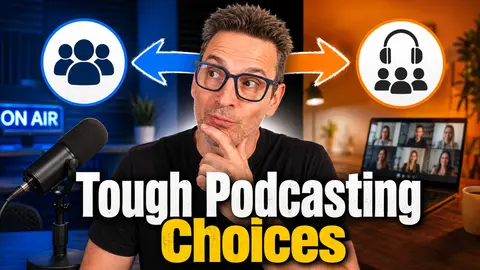
If you have spent more than five minutes in the podcasting space, you have undoubtedly run into the ultimate creator dilemma. You are sitting at your desk, looking at your analytics dashboard, watching the numbers tick up or flatline, and a heavy question crosses your mind: Should I be aiming for a massive, stadium-sized audience, or should I be cultivating a tight-knit, fiercely loyal tribe of superfans?
It's the classic tug-of-war between broad reach and deep connection. On one side, we have the seductive allure of massive download numbers, viral clips, and climbing the Apple Podcasts charts. On the other side, we have the quiet power of a community that buys your merchandise, joins your Patreon, hangs on your every word, and treats your weekly episode like a conversation with a close friend. Every podcaster eventually has to face this crossroads. Choosing a direction shapes not only how you market your show, but how you create it, how you monetize it, and whether you will still love making it three years from now.
This exact topic is something we dove into deeply on a recent episode of the show. If you want to hear a raw, unfiltered breakdown of this choice alongside other massive creator dilemmas, be sure to check out 553. The Hardest Podcasting Decisions Explained. But before you dive into that episode, let us break down the mechanics of the big audience versus high engagement debate and figure out which metric truly deserves your focus.
The Allure of the Big Audience: Chasing Downloads and Reach
Let's be completely honest with ourselves for a moment: high download numbers feel incredible. There is an undeniable rush of validation that comes from seeing your monthly download counts cross into the thousands, tens of thousands, or hundreds of thousands. A big audience feels like success. It looks great on a media kit, it turns heads when you mention it at parties, and it makes you feel like your voice is genuinely echoing out into the world on a grand scale.
Chasing a big audience usually means focusing heavily on top-of-funnel growth strategies. You start thinking about search engine optimization for your show notes, pitching yourself as a guest on massive podcasts to siphon off listeners, booking high-profile celebrity guests with built-in fanbases, and creating short-form vertical video clips for TikTok, Instagram Reels, and YouTube Shorts. The goal here is sheer discoverability. You want to cast the widest possible net to catch anyone who might remotely be interested in your niche.
However, the big audience chase comes with a very distinct set of challenges. When you build a show designed to appeal to everyone, you often end up appealing to no one in particular. Content can become homogenized, watered down, and safer as you try to avoid alienating casual listeners. Furthermore, high download numbers can easily become a vanity metric. If you have fifty thousand downloads a month, but zero interaction, zero community feedback, and zero product sales, those numbers are just digital ghosts. They don't translate into a sustainable business or a meaningful impact. Chasing downloads alone can lead to severe creator burnout because you are constantly on a treadmill, needing ever-larger numbers just to maintain the same feeling of accomplishment.
The Power of High Engagement: Building a Loyal Community
On the opposite end of the spectrum, we find the champions of high engagement. These are the podcasters who might "only" have five hundred or a thousand regular listeners, but those listeners are completely obsessed with the show. When the host drops a new episode, their audience drops everything to listen. When the host asks a question on social media, the comments section explodes. When the host launches a paid community, a course, or a piece of merchandise, those listeners open their wallets without hesitation.
Focusing on high engagement means you prioritize depth over breadth. You stop worrying about whether your show will appeal to the general masses and instead lean heavily into your authentic voice, niche quirks, and deeply personal perspectives. You answer listener emails on the air, you set up a dedicated Discord server or Facebook group for your community, and you treat your listeners like active participants in the podcast rather than passive consumers sitting in the back row of an auditorium.
The beauty of high engagement is its resilience. A podcast with a highly engaged audience is almost entirely immune to algorithm changes. Even if Apple Podcasts or Spotify tweaks how their recommendations work, your super fans know how to find you directly. They bookmark your website, they subscribe in their preferred apps, and they actively recruit new listeners for you through word-of-mouth recommendations. Engagement turns casual listeners into brand evangelists. It is a much warmer, more intimate, and ultimately more fulfilling way to run a podcast, especially in the early and middle stages of your show's lifecycle.
Discovery Versus Retention: Where Should You Focus?
When we break down this dilemma, we are essentially looking at the eternal battle between discovery and retention. Discovery is all about getting new ears on your show for the very first time. It is the art of the hook, the catchy title, the viral short, and the guest swap. Retention, on the other hand, is about keeping those listeners coming back week after week, month after month, and year after year.
Many new podcasters make the fatal mistake of spending ninety percent of their energy on discovery while ignoring retention entirely. They pour all their creative output into trying to trick algorithms into finding new listeners, but once those new listeners arrive, the audio quality is poor, the pacing is sluggish, and there's no real reason to stick around. It is like throwing a massive party and inviting the entire neighborhood, but when they show up, the front door is locked and there is no music playing.
To build a successful show, you have to master retention first. You need to make sure that the people who find you actually stay. Once you have a sticky, highly engaging show that people fall in love with, *then* you can pour gasoline on the fire with discovery strategies. If you focus on discovery before you have a high-retention show, you are just pouring water into a bucket with a massive hole in the bottom. You will constantly be working twice as hard to replace the listeners who leave just as fast as they arrive.
Monetization and Meaning: How Numbers Affect Your Bottom Line
Let's talk about the elephant in the room: money. How does the choice between a big audience and high engagement affect your ability to monetize your podcast?
Historically, traditional podcast advertising—the kind where you read a thirty-second spot for a mattress company or a meal delivery service—was strictly a game of big audience numbers. Advertisers bought space based on Cost Per Mille (CPM), meaning they paid a certain dollar amount per one thousand downloads. If your download numbers were low, traditional advertisers wouldn't give you the time of day, regardless of how much your listeners loved you.
However, the creator economy has shifted dramatically in recent years. Today, high engagement is often far more profitable than a massive, disengaged audience. Brands are waking up to the power of niche micro-influencers. A podcast with five thousand hyper-engaged listeners in a very specific niche—say, vintage watch collecting or local real estate investing—can command much higher sponsorship rates or drive significantly more affiliate sales than a comedy show with fifty thousand passive listeners who skip through the ads.
Furthermore, high engagement opens the door to direct-to-consumer monetization. If you want to launch a paid membership, sell digital products, offer coaching, or crowdfund your show, you do not need a massive audience. You only need what Kevin Kelly famously called "1,000 True Fans"—one thousand people who are willing to pay you one hundred dollars a year for your work. High engagement is the direct bridge to building those true fan relationships, turning your passion project into a viable business without needing a million downloads a month.
Making the Choice: Which Metric Truly Matters for Your Show?
So, where does this leave you? Big audience or high engagement? The truth is, it is not always a binary choice, but when you are forced to prioritize, the answer almost always comes down to your personal goals and the current stage of your podcast.
If you're running a show that relies heavily on programmatic ad revenue or broad cultural commentary, you need scale. You need a big audience because your business model requires high volume to generate revenue. But if you are building a personal brand, selling your own products, establishing authority in a professional niche, or simply looking for a deep, meaningful creative outlet that will sustain your mental health for years to come, high engagement wins every single time.
Don't let vanity metrics trick you into building a show you do not care about for an audience that does not care about you. Focus on the people who are already there. Serve them deeply, listen to their feedback, and build a community that feels like an exclusive club rather than a crowded bus.
Podcasting decisions are rarely easy, and there is no single blueprint that works for every creator. If you enjoyed unpacking this dilemma and want to hear the crew tackle even more tough choices...like in-person versus remote recording, celebrity guest pitfalls, and balancing money with creative control—you owe it to yourself to listen to the full discussion. Head on over and listen to 553. The Hardest Podcasting Decisions Explained. It will give you the clarity and confidence you need to make the right choices for your show moving forward. Until next time, keep creating, keep engaging, and keep pushing your podcast to the next level!

Host / Executive Producer
With a career spanning 20+ years in podcasting, Marc Ronick is the driving force behind iRonick Media and founder of the Empowered Podcasting Conference. His innovative approach to audio & video content, including the integration of AI-driven tools, has set new industry standards. As a daily social audio host on Clubhouse, Marc engages with fellow podcasters, sharing insights on everything from mindset to the latest news in podcasting. His commitment to empowering others and his passion for creativity make him a sought-after voice in the podcasting community.
When You Find Your People You Become Empowered